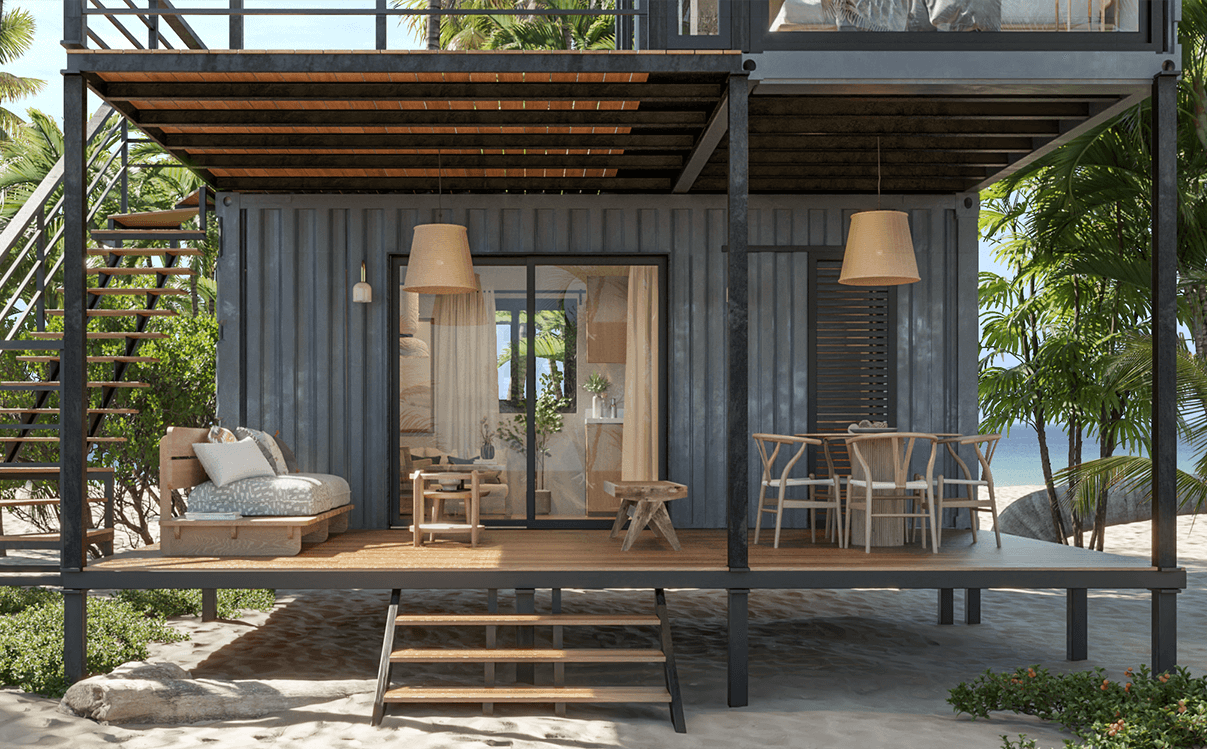
In today’s architectural innovation and sustainability era, transforming shipping containers into livable homes, known as hometainers, has captured global attention. Moreover, these projects represent a unique fusion of industrial functionality and architectural creativity, resulting in surprising and eco-friendly residences. From Mexico to France, let’s explore some of the most impressive container projects worldwide and consider if Mexico is ready for this trend.

Benefits of Hometainers
The Mexico Real Estate market landscape is evolving rapidly. The container homes we used to see in Northern Europe are now a reality in Mexico. Beyond container homes or “hometainers,” these structures are being used for commercial spaces such as restaurants and stores. Therefore, this is an exciting trend and opportunity for Yucatan Beachfront real estate.
Just imagine getting your hand onto an affordable beachfront lot on the coast of Yucatan and then tailoring your container to your needs. Let’s explore more about the benefits of a container home vs a traditional one:
Environmental Sustainability
Container homes are an intelligent response to current environmental issues. By repurposing shipping containers, the amount of waste ending up in landfills is significantly reduced. Additionally, this method avoids the deforestation associated with traditional home construction. Dōmad prides itself on its commitment to sustainability, transforming these containers into modern and eco-friendly homes.

Versatility and Adaptability
One of the main advantages of container homes definitely is their versatility. These modular structures can adapt to various needs and locations, from tourist accommodations to family homes and commercial spaces.
Durability and Resilience
Shipping containers are inherently robust and durable and built to withstand harsh maritime conditions. This translates into high-quality construction for container homes. With proper maintenance, these structures can last for decades, providing reliable and secure housing for permanent and temporary visitors. Dōmad constructs its hometainers using corten steel, ideal for the climate of southeastern Mexico.

Energy Efficiency
Building a container home offers the opportunity to integrate advanced energy-efficient technologies. Energy consumption and associated costs can be drastically reduced from solar energy systems to high-quality thermal insulation.
Rapid Construction
Transforming a container into a livable home is considerably faster than conventional building methods. This means you can have your home ready in much less time, which is especially beneficial in emergency situations.
International Container Projects
Cross Box, France
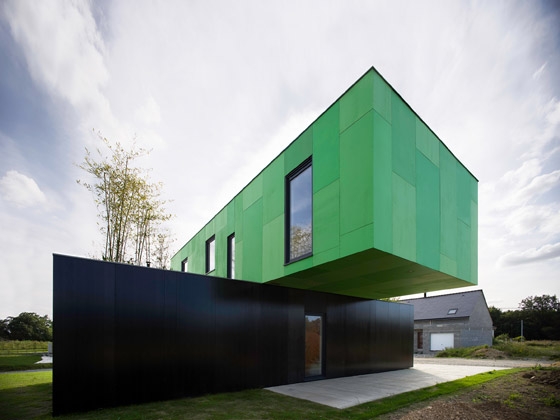
The “Cross Box” is undoubtedly a notable example of innovative container architecture. This French project uses four 40-foot shipping containers arranged in a cross pattern to create a two-story home with 104 square meters of living space. Moreover, this arrangement provides unique covered areas for the entrance and parking.
Keetwonen, Netherlands
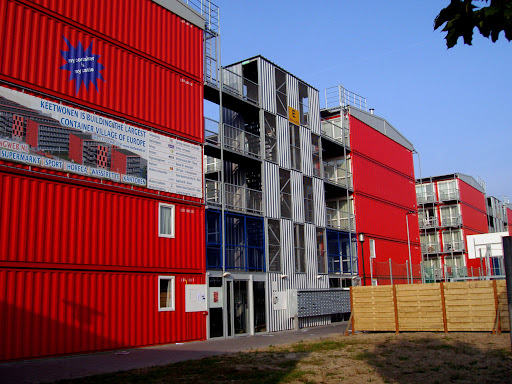
Amsterdam’s Keetwonen neighborhood is the world’s largest container housing project, featuring around 1,000 containers. Initially used as temporary housing, these containers now provide permanent, fully equipped living spaces with amenities such as bathrooms, kitchens, bedrooms, and study areas, enhanced with large windows for natural light and ventilation.
Common Ground, South Korea
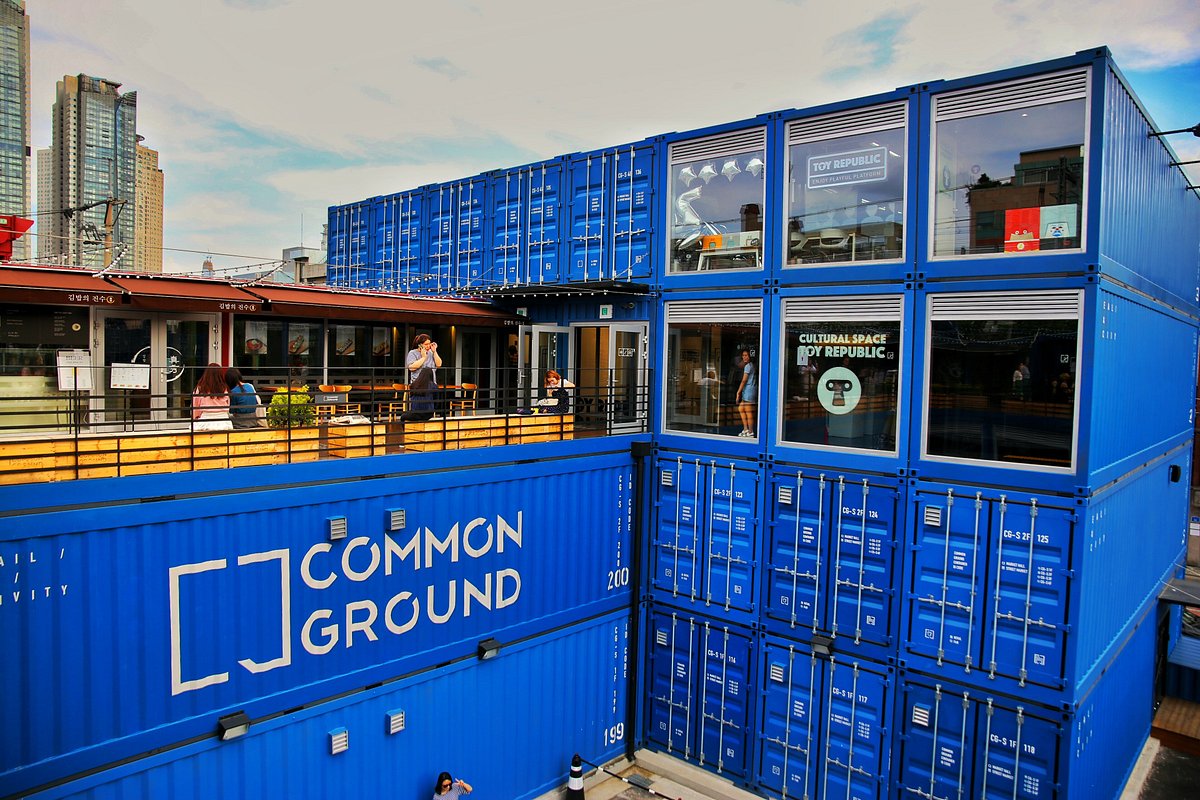
Seoul’s Common Ground is the largest commercial complex made with containers. It consists of two buildings, the Street Market and the Market Hall, which prominently showcase container modules to create a visually striking commercial space.
Mexican Container Projects
Secundaria Valladolid, Mexico
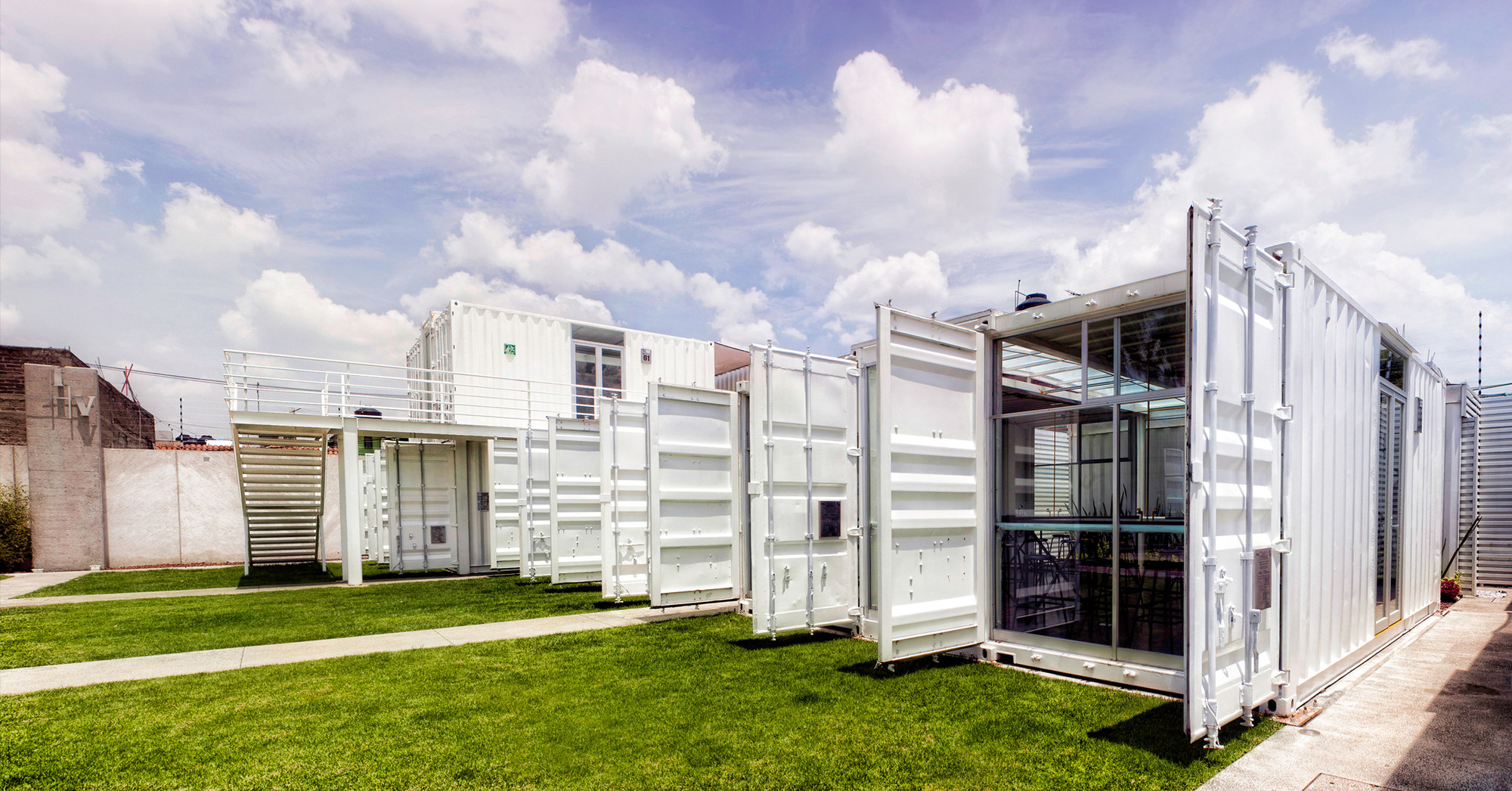
Mexico’s Secundaria Valladolid project uses marine containers for school classrooms, addressing the challenge of construction time while promoting sustainable practices. The project includes classrooms, a computer lab, and a multifunctional lab, demonstrating the versatility and efficiency of container construction in educational settings.
MUNCHER, Mexico City
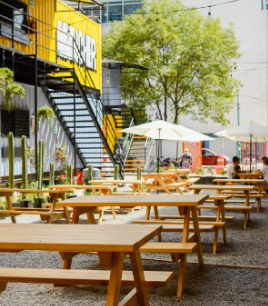
Mexico City’s MUNCHER food truck park utilizes repurposed shipping containers for its dining spaces, addressing the challenge of urban space limitations while promoting sustainable practices. The park features a variety of food trucks offering diverse culinary options, demonstrating the versatility and efficiency of container construction in creating vibrant, functional, and eco-friendly communal spaces.
Is Mexico Ready for Hometainers?
As a result of the successful implementation of the Secundaria Valladolid project and MUNCHER, it is evident that Mexico is ready to embrace the container trend. These innovative and sustainable solutions offer numerous benefits such as cost-efficiency,eco-friendliness, and versatility. Thus making them a viable option for addressing housing and space issues in urban and rural areas.
So, as the world seeks greener and more flexible living solutions, hometainers present a promising path forward. With its growing interest in sustainable practices and innovative architecture, Mexico could become a leader in this exciting trend.