If you have ever been to the beautiful Mayan pyramids of Chichen Itza, you know that it is a place full of magic. This is even more true on the Spring Equinox (which is tomorrow) when the sun creates a snake-shaped shadow crawling up the main staircase.
Here’s a picture that friend took last year:
Actually, it’s probably better to say “science” than “magic.” Apparently the ancient Mayans were very advanced in the sciences of astronomy and movements of the planets, etc. What remains a mystery is why they abandoned their beautiful, advanced cities even before the Spanish arrived.
Here’s one more picture:
If you can ever plan to be in Chichen Itza for the spring Equinox, I highly recommend it!
While most of us have seen tacos in the U.S. with ground beef on them, this would be unheard-of in Mexico. People who have lived in areas with a Latin community may be familiar with something more authentic.
Here’s interesting question; do you know what Mexico’s favorite and most common kind of taco is?
From my experience, and according many of my friends who know our country well, the favorite is a very distinct type of taco that northerners are likely never to have seen back home, but are ever-present virtually where ever you go in Mexico:
Tacos al Pastor
If you see how these tacos are made – on a large rotisserie with the meat shaved off the spit – the first word that will probably come into your mind is “shawarma” or “doner kebab.” And, in fact, they have their roots in the shawarma introduced to Mexico by Lebanese immigrants in the mid-twentieth century.
The name, “al pastor,” means “shepherd style” and refers to the lamb from which shawarma is made; tacos al pastor, however are made out of pork.
The pineapple on top of the spit of meat helps to soften the meat.
How are they served?
As you see in the picture above, they are usually served on small corn tortillas; on top of the meat, only cilantro and chopped onion are served. Sometimes a thin slice of the cooked pineapple is added. Many people will add thinly sliced radishes and hot sauce. Mexicans will almost always squeeze lime juice onto their tacos.
People enjoy them with just about any kind of cold drink (beer, soda, natural fruit juices, etc.)
Where, when, how much?
While they have their roots in central Mexico (where the Lebanese settled mostly) they now seem to be available throughout the country. They are served in a variety of locations, ranging from something that looks like a hotdog stand on the street corner to taco shops. They are usually only available in the evening.
They are always cheap. I have seen anything from about twenty five cents a taco to about sixty-five cents, depending on how big they are, what region of Mexico you’re in, and how nice the place is where you’re eating them.
Here in Playa we have quite a number of good taco shops to find this tasty food, including quite a number on Fifth Avenue. One good and popular location is El Fogon (pictured above) on the corner of 30th and Juarez.
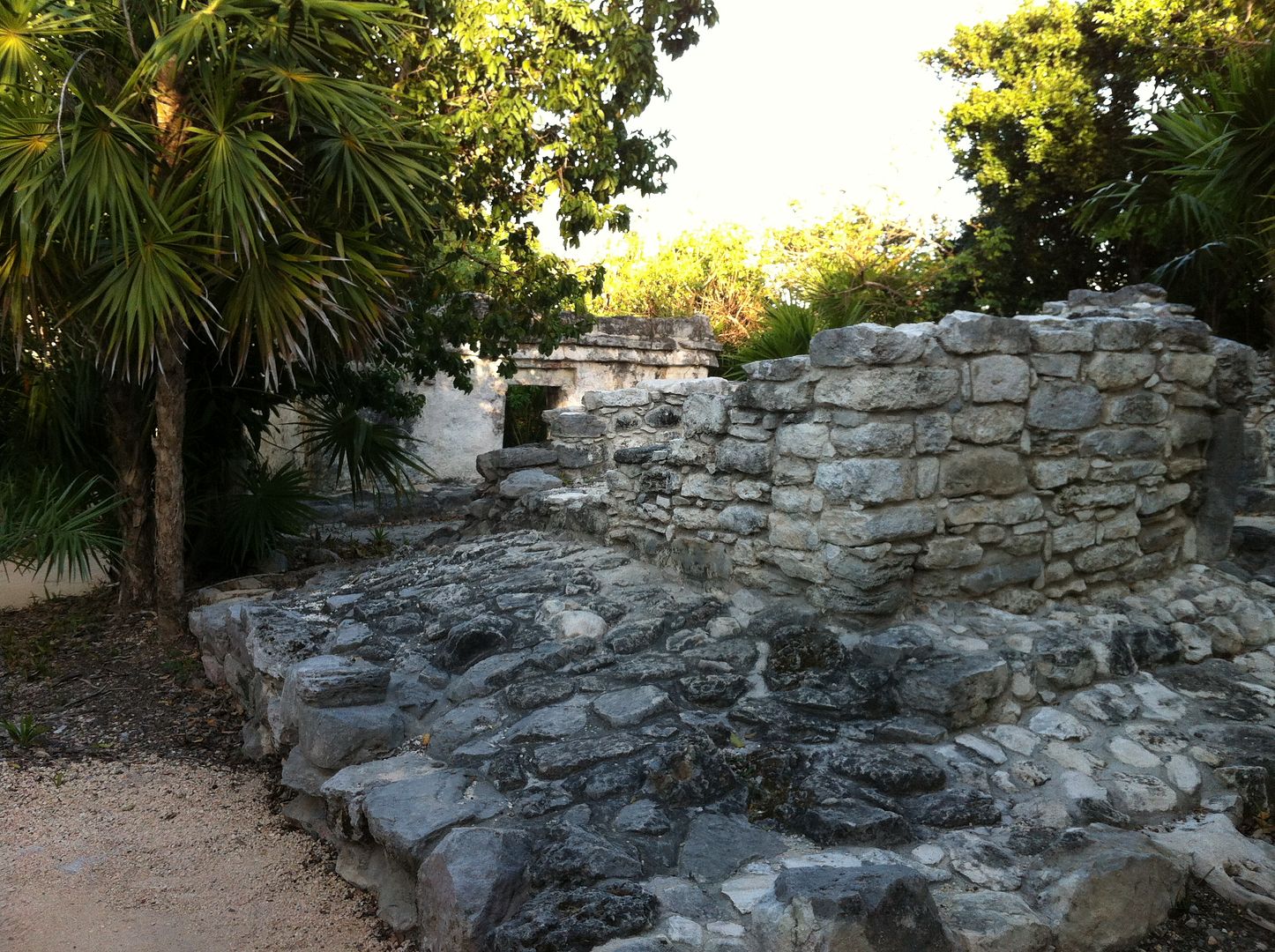
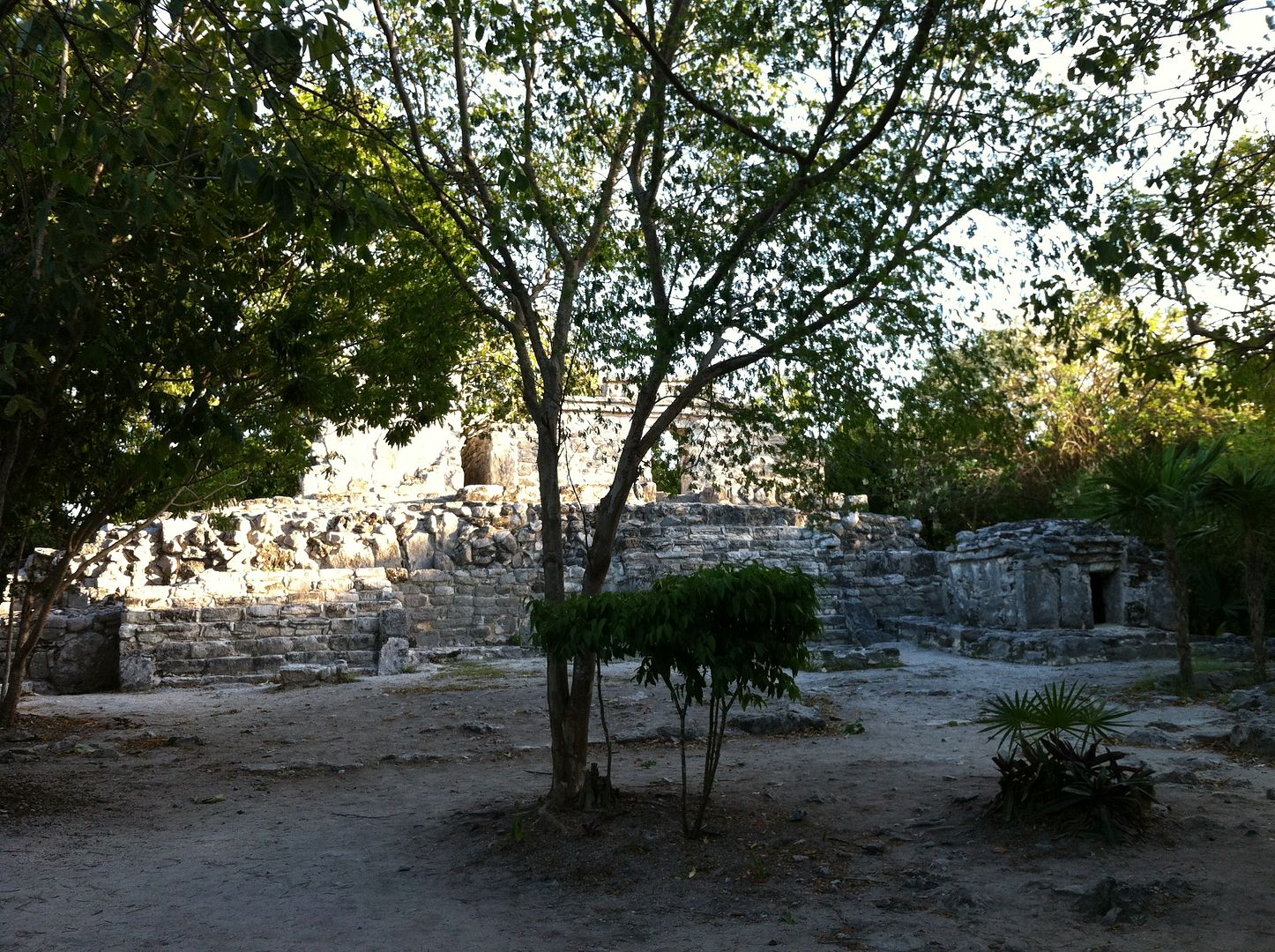
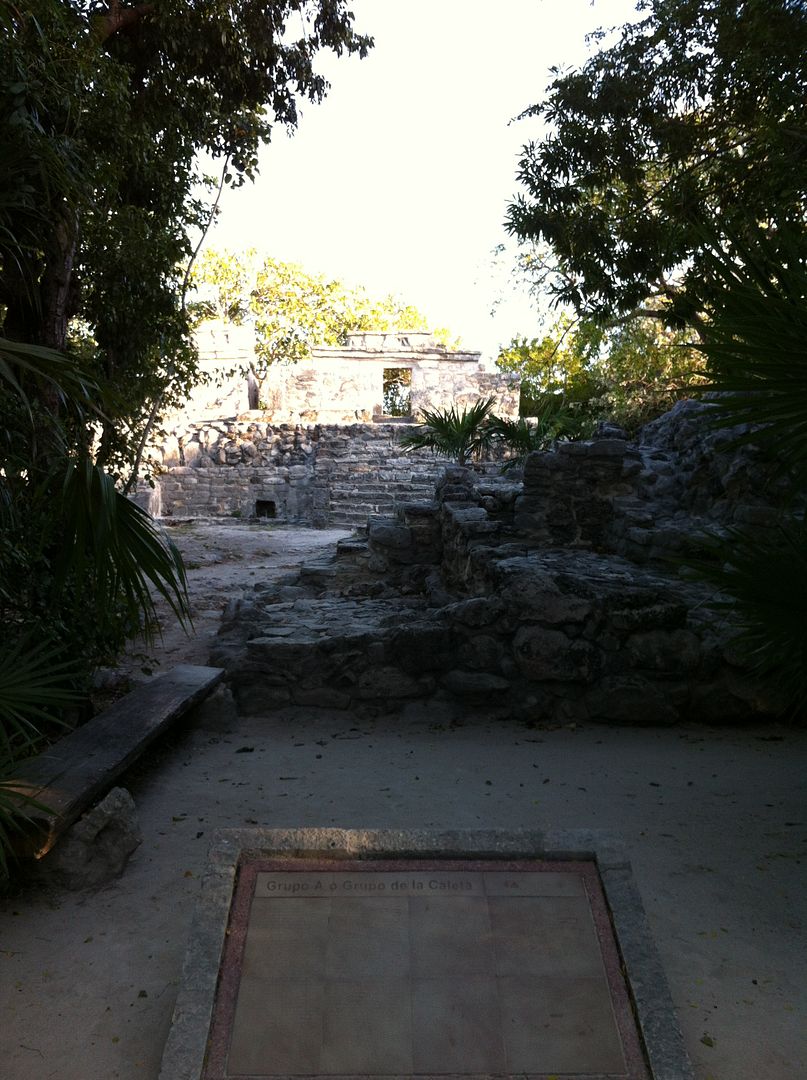
Last week, I said that I had finished the posts on Xcaret. However, looking through my pictures, I noticed that I had missed something important; in Xcaret, there is a site of ruins of ancient Mayan pyramids – authentic pyramids that existed on the site chosen for the park.
Take a look at my pictures:
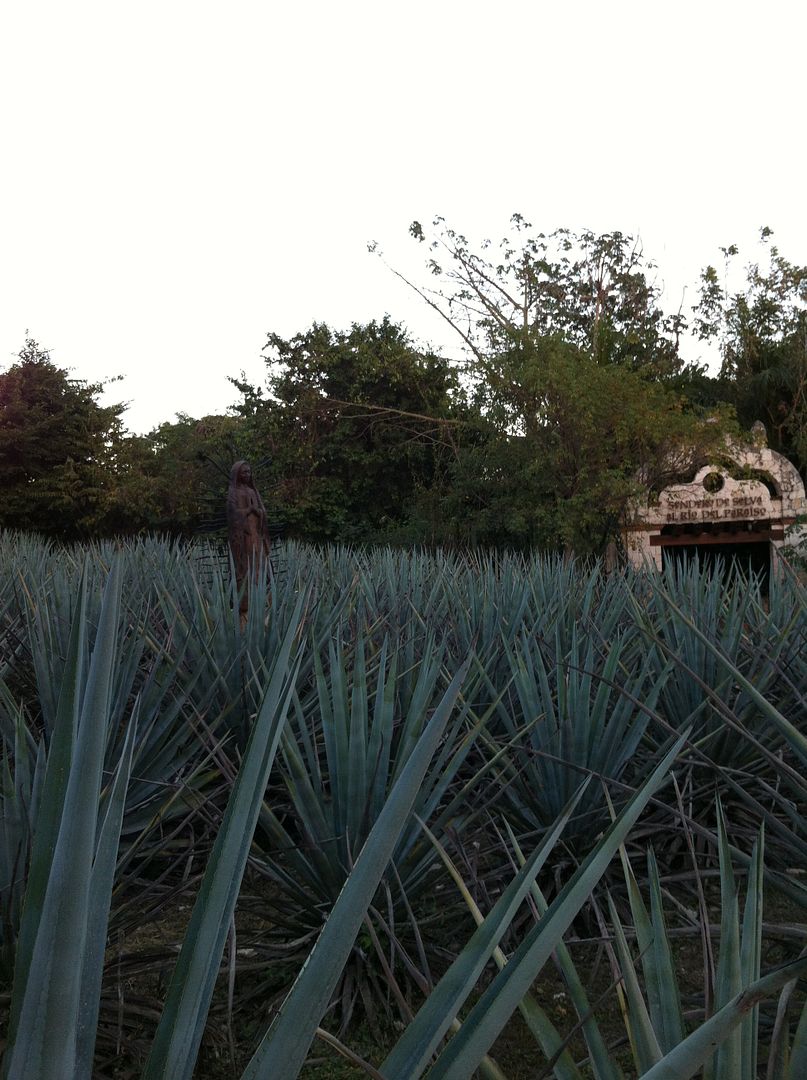
And finally, in the middle of the agave field (agave is the cactus used to make tequila), where one of the re-enactments takes place, there is a beautiful little statue of the Virgin Mary (Our Lady of Guadalupe) – very Mexican!
Now, this will really be my last post about Xcaret, at least for a while!
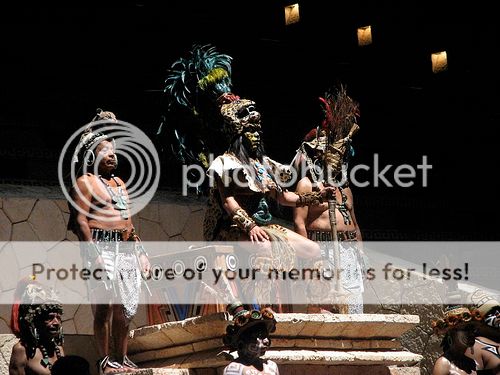
Unless you’ve been to Xcaret, then I’m sure you probably haven’t seen anything as spectacular as this. And the word “spectacular” is so appropriate; it both reflects the Spanish name for “show” or “spectacle” which is the title of the show – Mexico Espectacular – and also the impression the show has left on me every time I’ve seen it!
The show follows Mexico’s history from the Mayan and Aztec civilizations up to the modern day in spectacles of dance, costumes reflecting each culture and era, music and fire!
Now, I have to admit one thing; it’s really hard to get good pictures because it’s in the dark with bright lights of different colors and lots of movement. The pictures do not do the show justice. Like the other shows at Xcaret, it draws you in and takes place all around you with the action moving up into the aisles of the benches. Although the pictures look small, you certainly don’t feel that way when you’re there. You see the action unfold beautifully in front of you on a huge stage. For that reason, in addition to my own pictures, I’m also sharing some pictures from other sources below.
Now, just so you get a better idea of some of the details, here are some pictures from other sources (some of which I’m sure were professionally taken by people working for the park):
I hope you enjoyed the pictures of Xcaret as much as I did taking them, and, whenever you’re in Playa del Carmen or Cancun, be sure to set a day aside to get an excellent taste of Mexico!
-by Thomas Lloyd
TOPMexicoRealEstate.com; Mexico’s Leading Network of Specialists for Finding and Purchasing Mexican Properties Safely
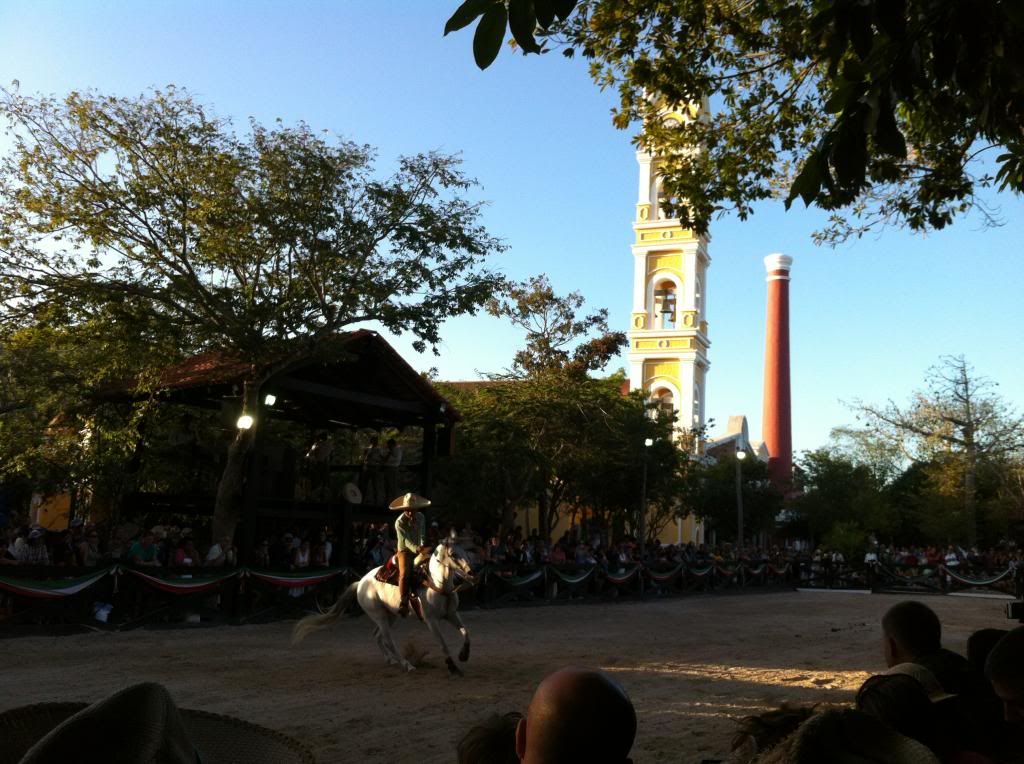
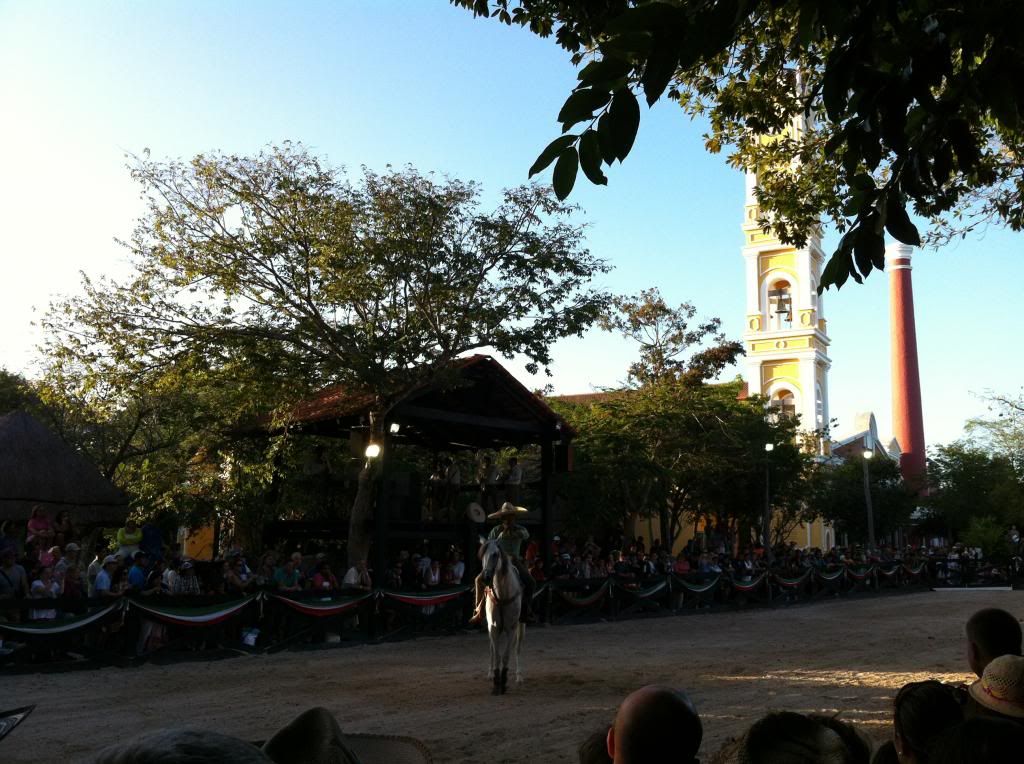
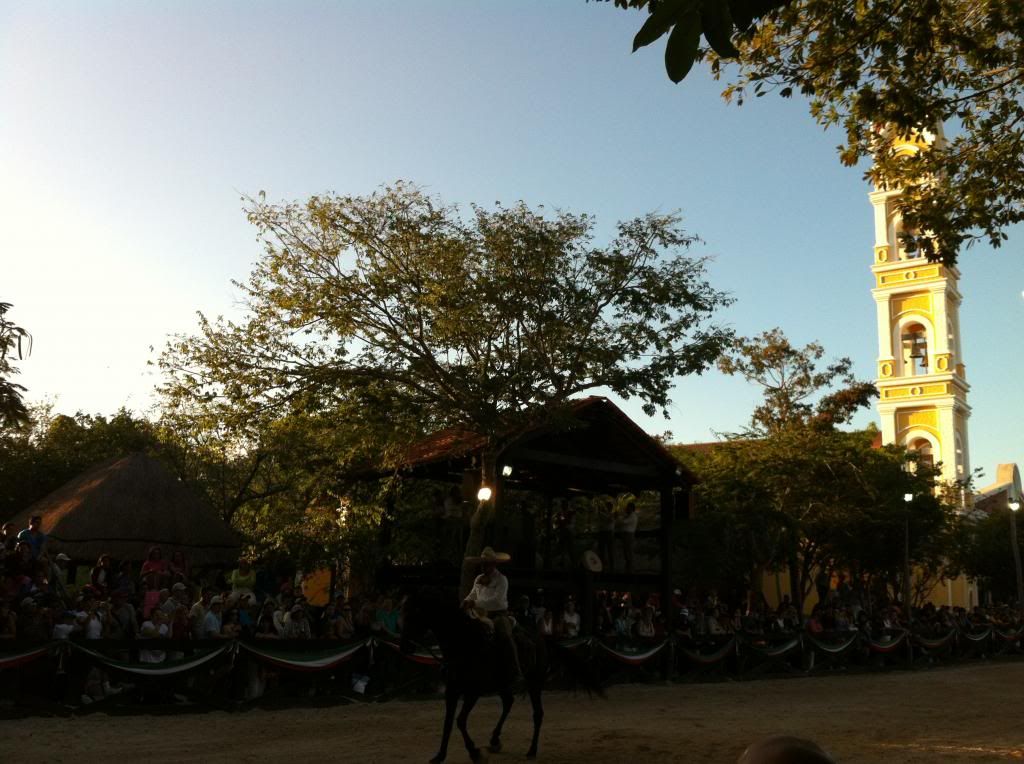
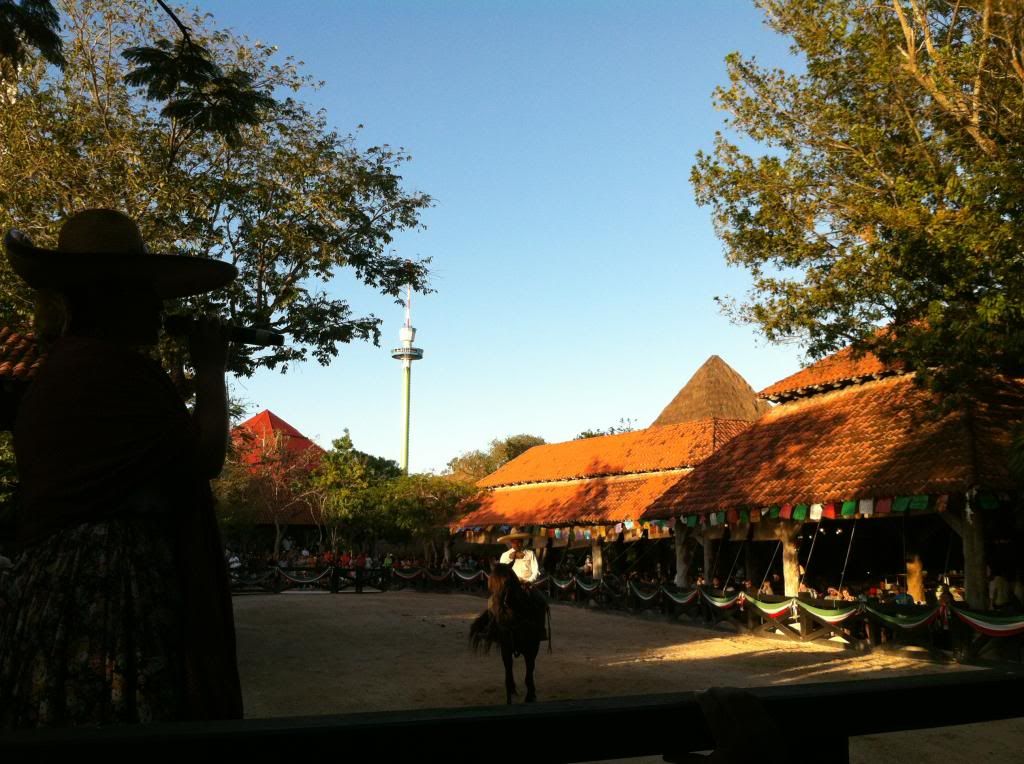
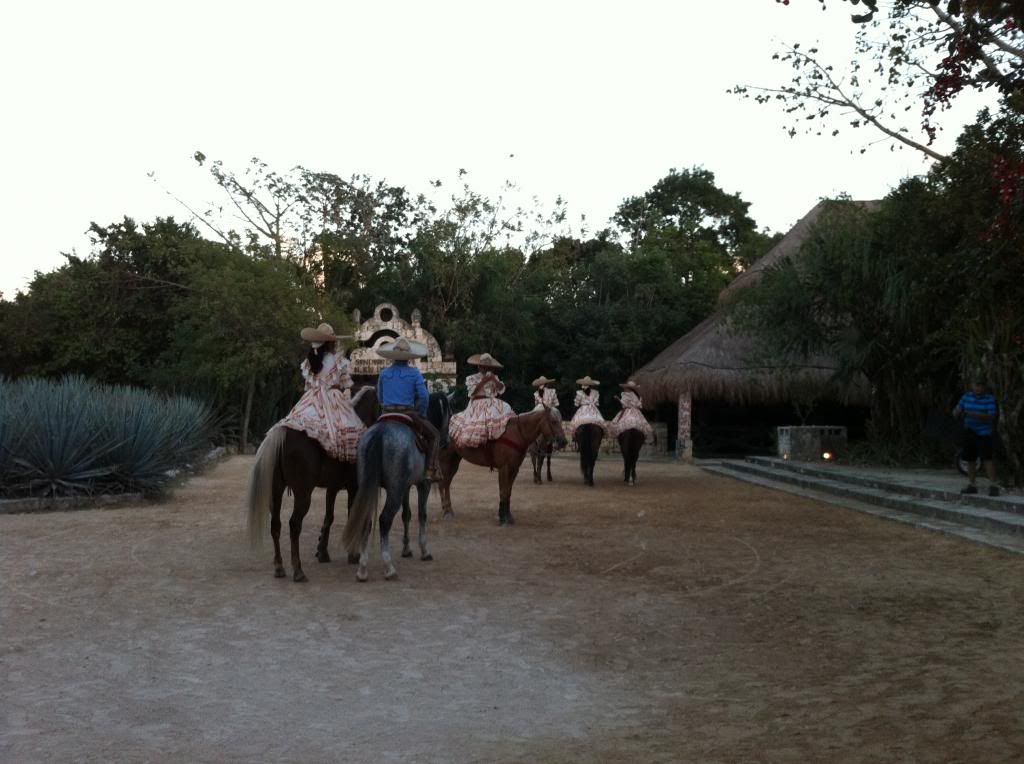
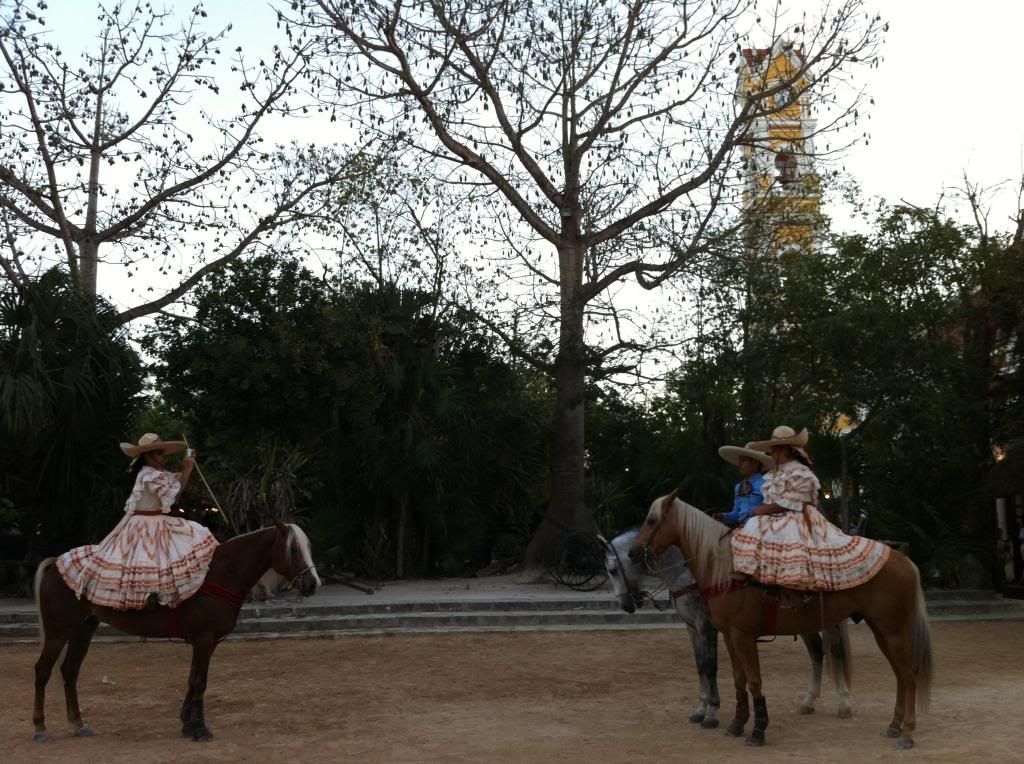
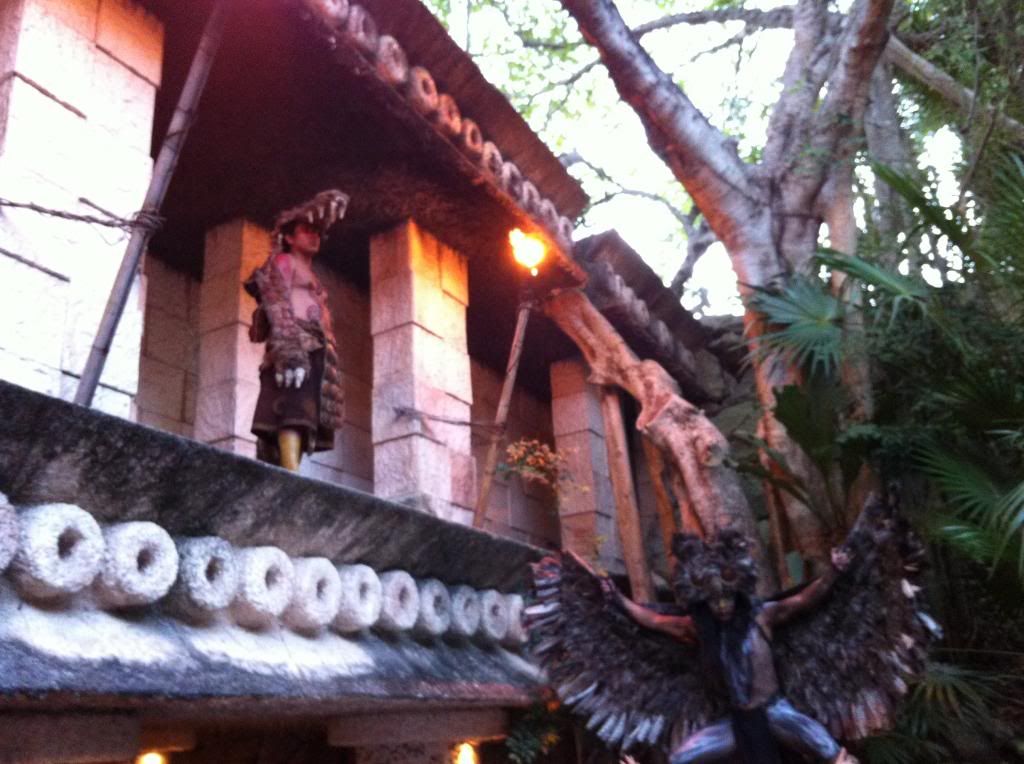
One of the most exciting parts about visiting Xcaret is seeing various scenes from Mexico’s history and culture acted out not only right before your eyes, but all around you. Today, I am going to share a few pictures of the various shows which take place throughout the park at various points in the day.
To start, let’s take a look at a the magnificent horse-riding show I saw:
Next, here are some shots of life in an old hacienda (notice the agave cactus plants, used to make tequila):
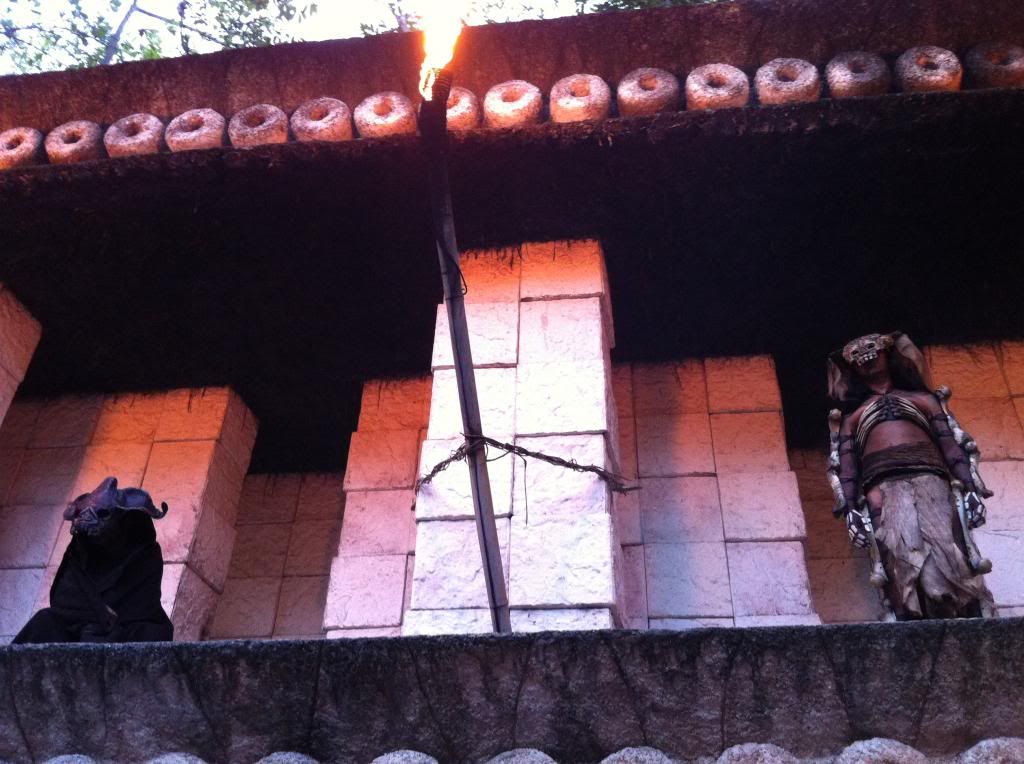
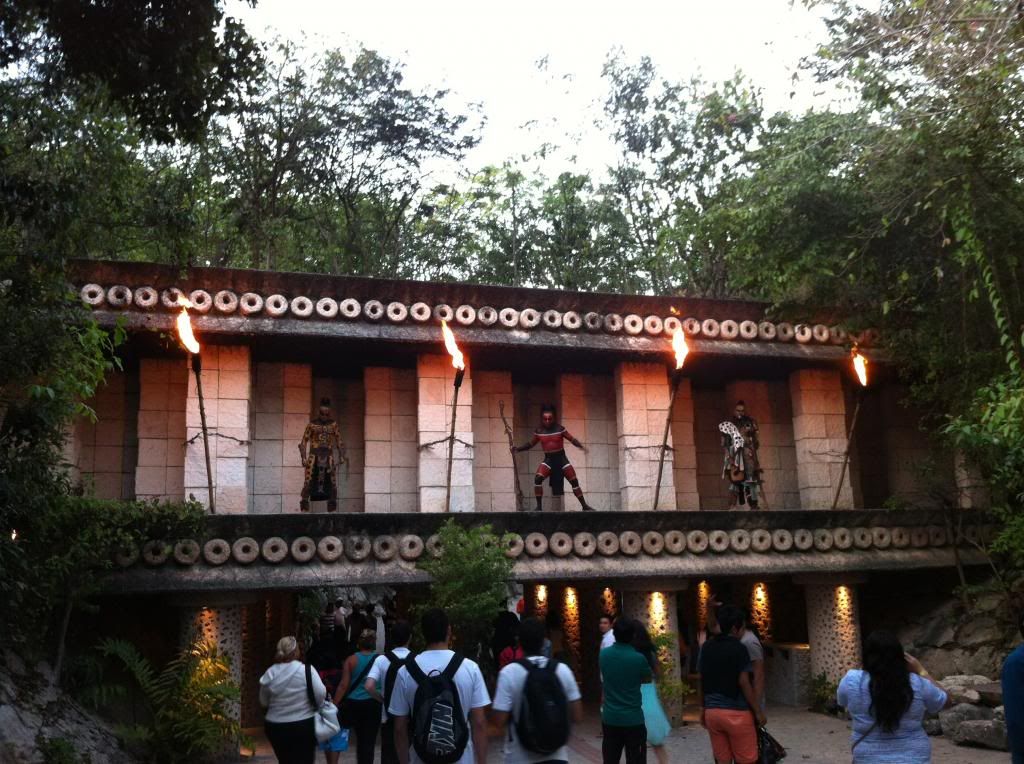
Finally, at one point in the park, what seem to by Mayan statues suddenly jump to life and put on a fabulous show of ritual dance and firework:
These shows are not merely “staged” in front of you; they take place so much in your immediate presence – and sometimes right around you – that you really feel that you’ve stepped into a different time and very different place. They allow you to really experience Mexico.
Tomorrow and Friday, you can look forward to some pictures of the main show which takes place at the end of the day.
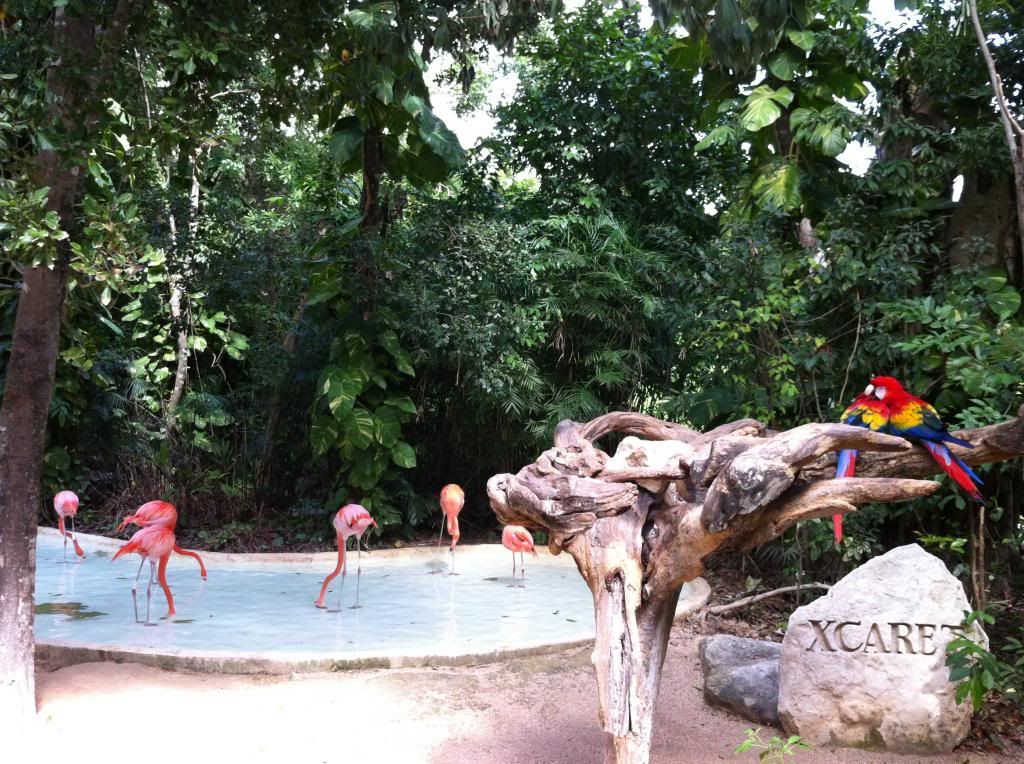
Mexico is a country rich in wildlife and nature. As with so many other attractive aspects of things to see and experience in Mexico, Xcaret offers a very good taste of the kinds of colorful birds, wild cats and nature you will find – at least for the Yucatan Peninsula.
For the intro to Xcaret, click here. For a gallery of photos on the architecture and art, click here.
Today I’m going to share a series of pictures on wildlife and nature. I’m trying something new and sharing it as a slideshow. It will automatically go through all the pictures, but if you move the cursor over the pictures, you will see buttons for back, forward and pause so you can have some control.
In the slide show, you will see jaguars, panthers, flamingos, birds of various kinds, bird eggs, and another animal called a tapir, I believe. There are also some nature shots:
On Friday, I gave an introduction to the beautiful eco theme park call Xcaret, giving an overview and sharing some pictures. (See In Xcaret, Mexico Comes Together in One Place – Part 1 – Intro.) Today I’m continuing this little series on Xcaret to share pictures about Mexico’s culture and history in this park.
The park presents a wide variety of aspect of country’s history and culture ranging from the old estates to the Mayan hut villages, to a traditional cemetery. Take a look.
Throughout Xcaret, you will find traditional Mayan homes and architecture:
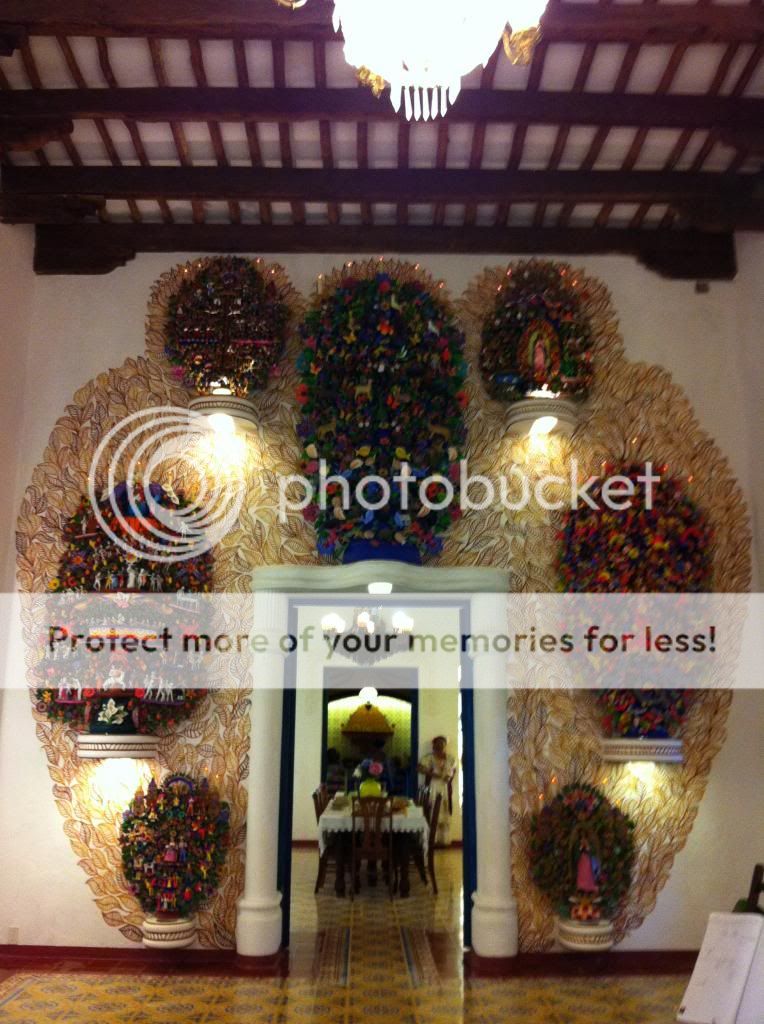
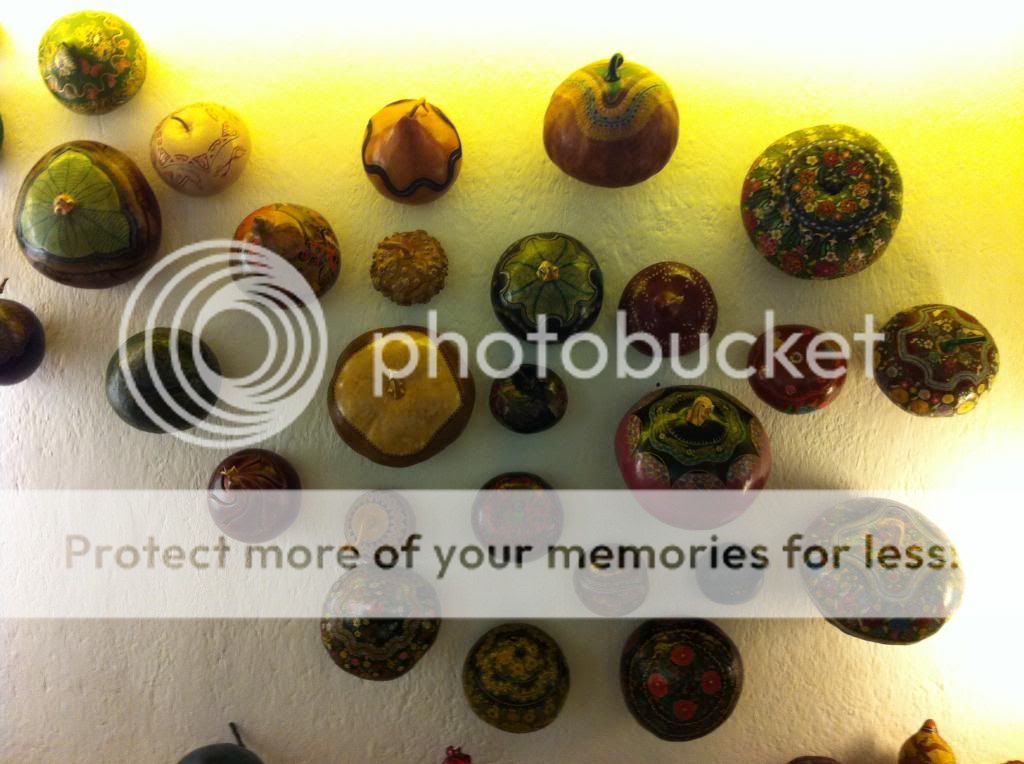
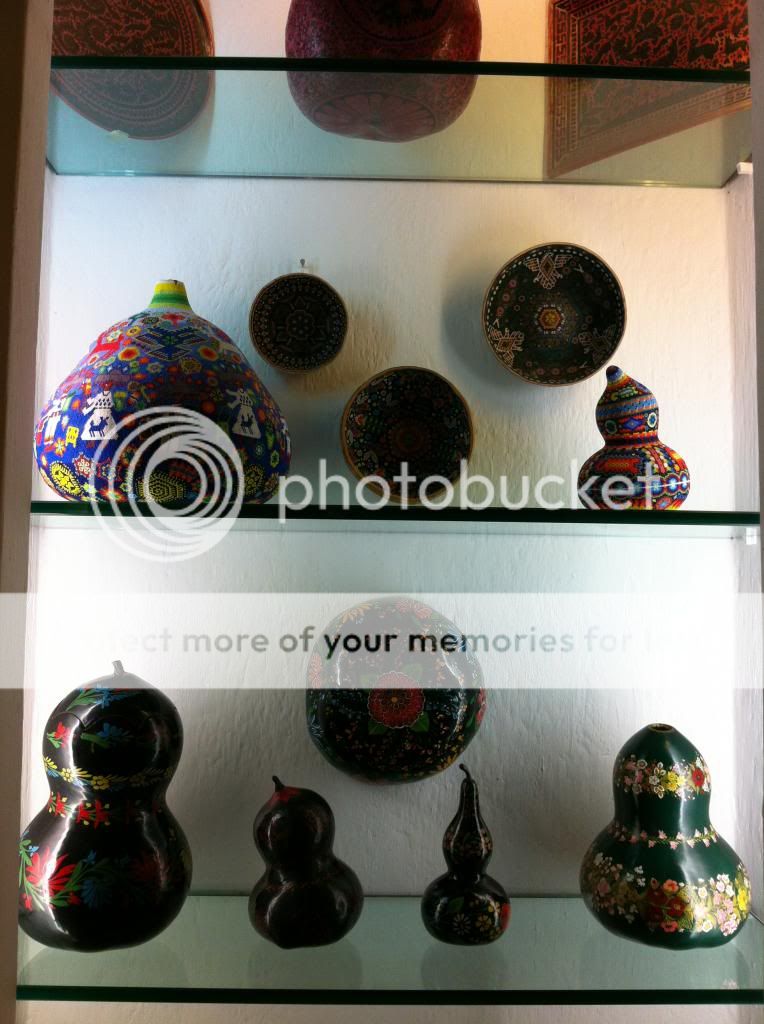
… Mayan artifacts and artwork:
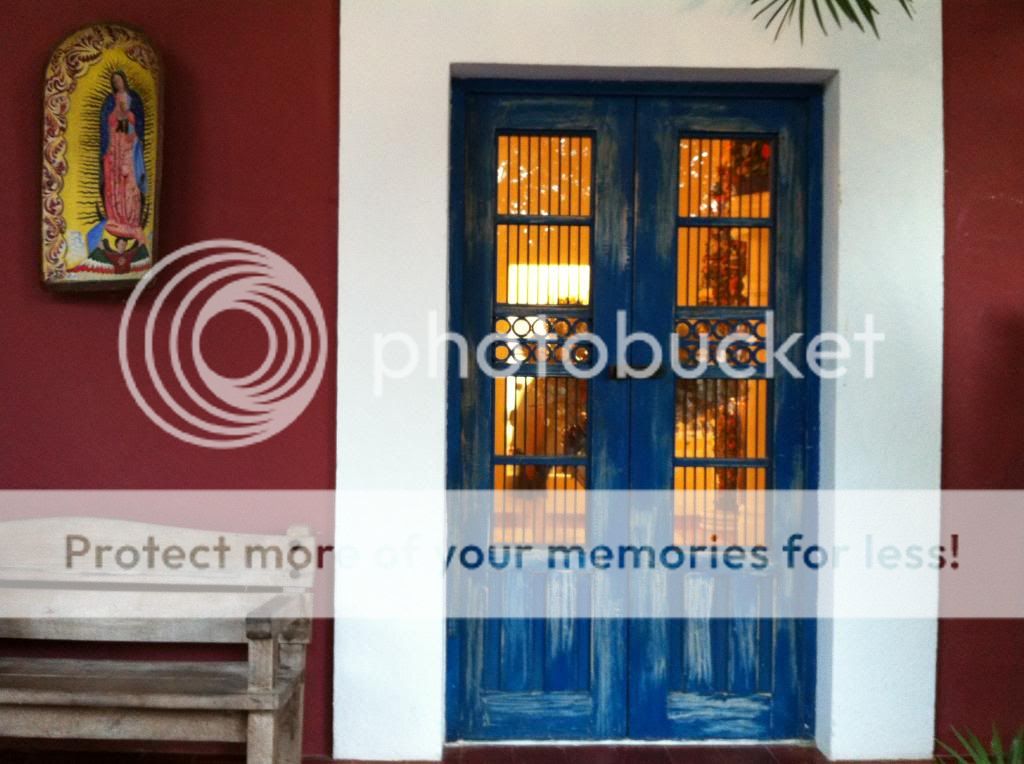
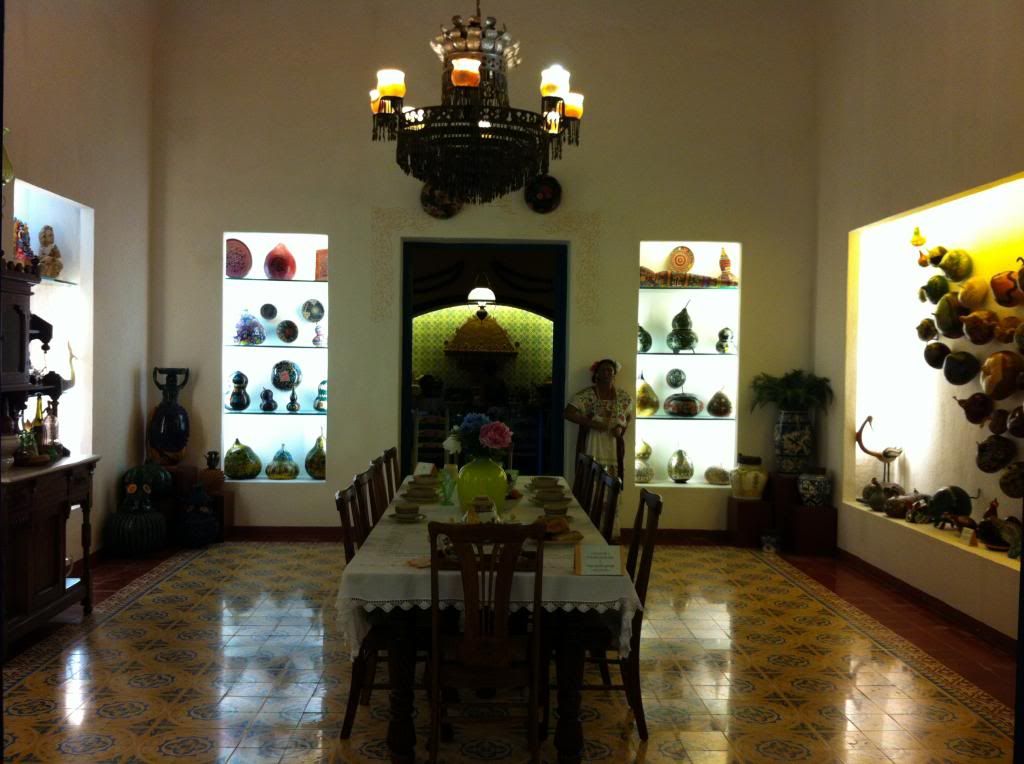
… colonial and traditional Mexican architecture:
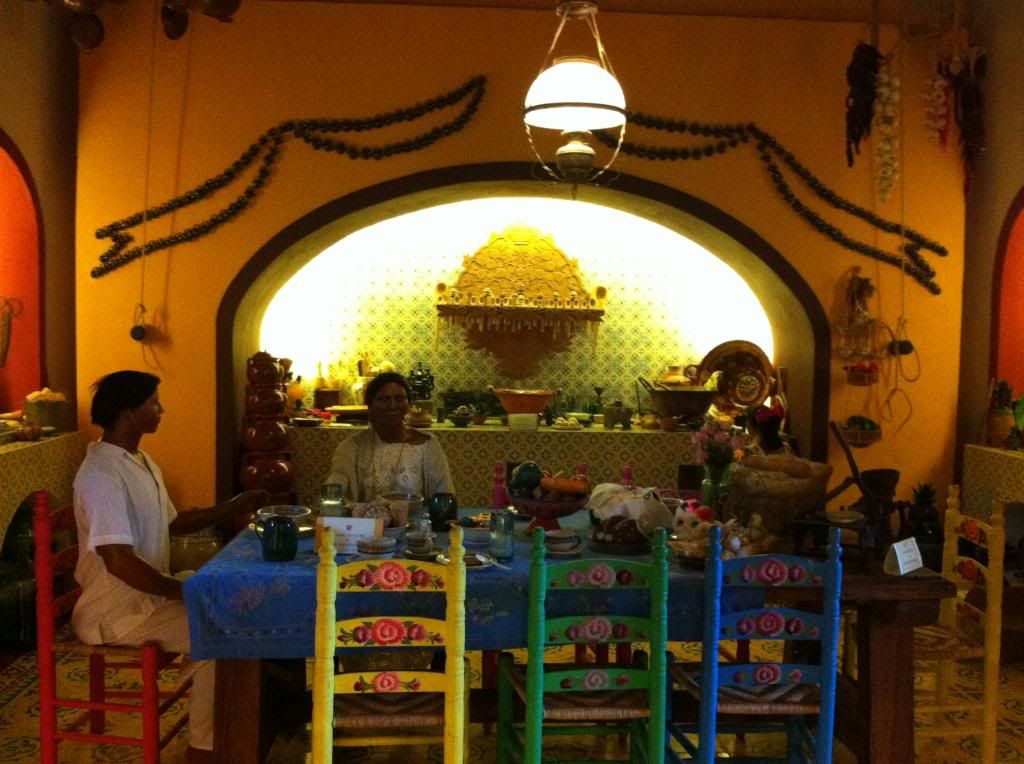
… and finally displays and reenactments of traditional lifestyle:
Tomorrow, we will see pictures of wildlife in Xcaret, followed by a couple of posts on the various reenactments and shows.
TOPMexicoRealEstate.com; Mexico’s Leading Network of Specialists for Finding and Purchasing Mexican Properties Safely
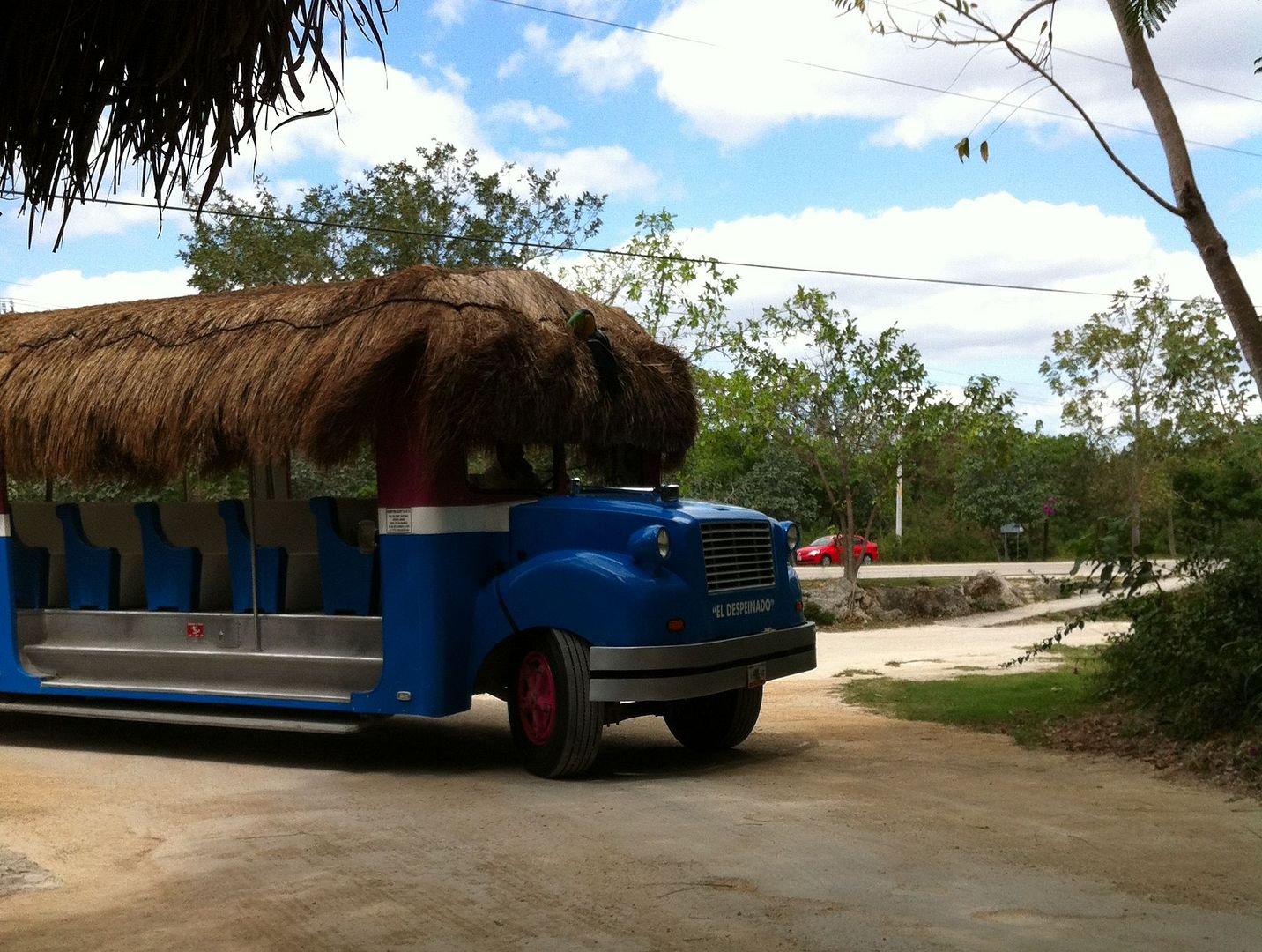
I’ve pointed out before that contrary to Hollywood’s depiction Mexico is full of variety in food, culture, music, art, climate, biospheres and many other points. If you wanted to take a tour of even a brief taste of some this country’s variety and beauty, you would be looking at spending a couple of thousands of dollars and a few months of your life. It would most certainly be well worth the time and money.
However, there is another option. Go to Xcaret.
How to See Mexico in a Day
Within a day, you can get not only a “glimpse” but also a real taste of Mexico as a whole. Mind you, it is a very long day. To fully enjoy Xcaret I always suggest going back for two visits; but most people who have been there have no issues with going back for a third or even fourth.
Xcaret is a theme park with a focus on Mexican culture, history and nature. This is done through museum-like displays – but much more interactive – , workshop-style stations and shows which take place in a very real setting that envelops you and draws you in more than just being on a stage to be seen in front of you. The entire park, along every path has something not only to see, but also to do.
Culture and History
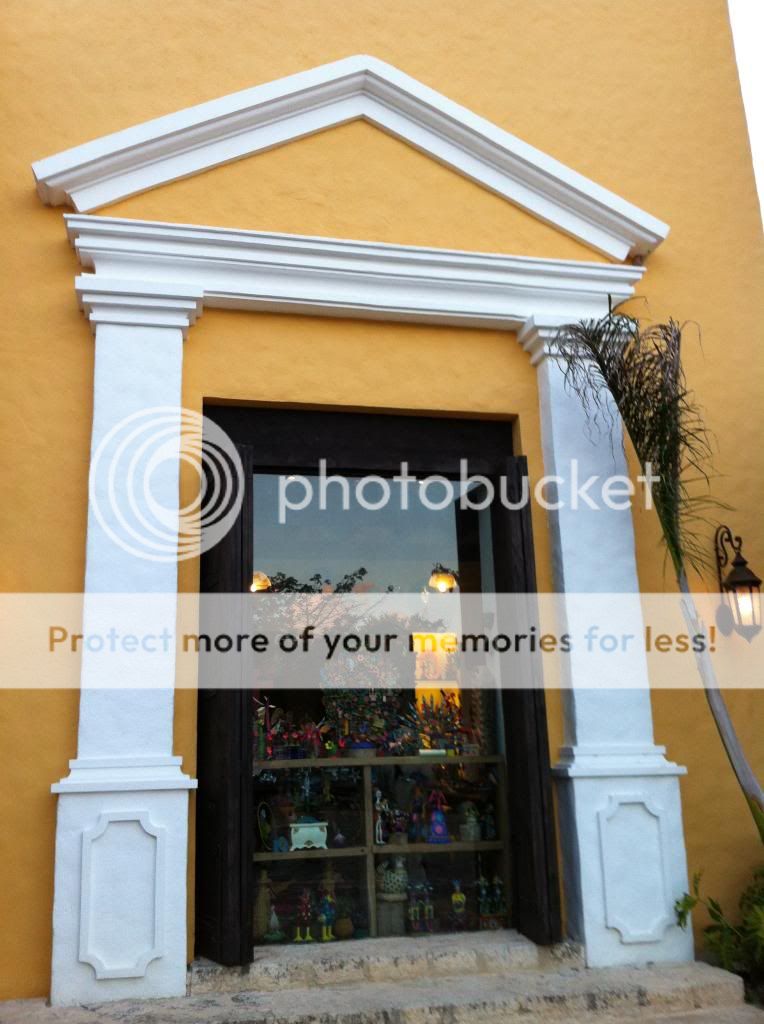
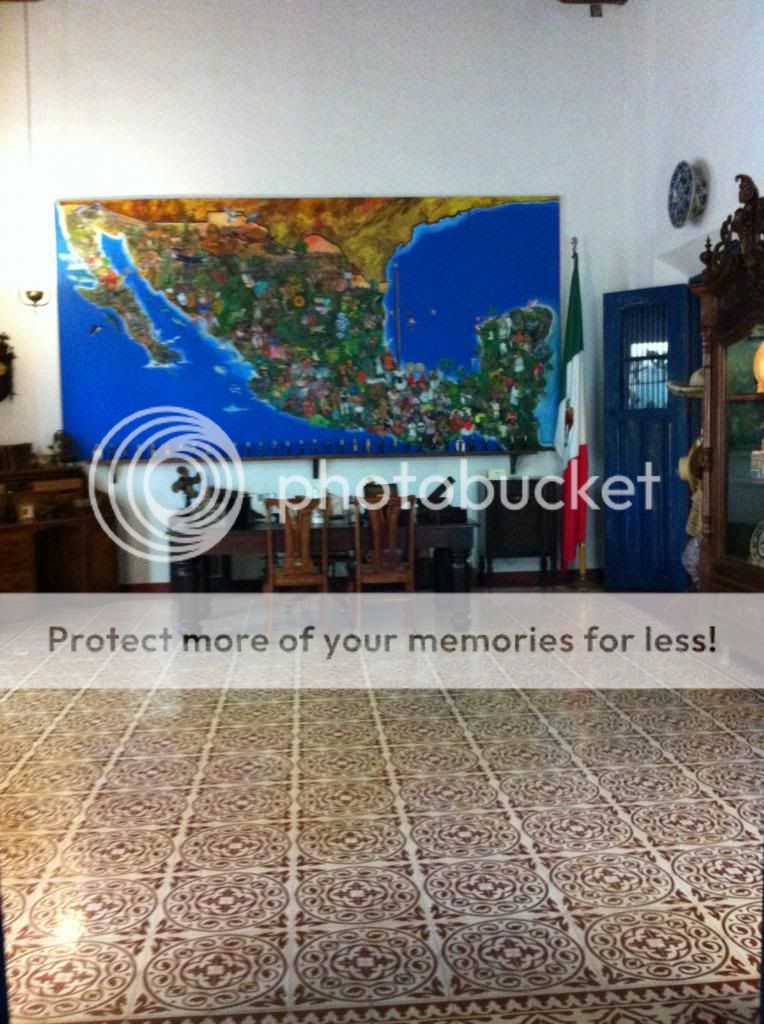
Everything that’s not nature in Xcaret is a very authentic reconstruction of a certain era in Mexican history or a region of the country. This covers everything from the hut villages of the Mayans to the grand “haciendas” (plantation estates) where most of the items Mexico is famous for were produced in the past. There are colonial-style buildings and even a reconstruction of a traditional Mexican cemetery. There are items which you can see accurately re-constructed that you may not even have access to in travel.
Nature and Wildlife
The park is full of nature. It was very carefully designed to preserve the majority of the the sub-tropical jungle which defines the Yucatan Peninsula. Within this setting, a large variety of wildlife has been introduced which can be seen first hand, such as colorful birds and wildcats. It’s kind of like a zoo, but you don’t feel like you’re walking by animals that have been “boxed in.” On the contrary, you feel like you’re the one who’s stepped out of your world and into theirs. It’s truly sensational to see such beautiful animals so close-up, so first-hand.
The Shows
Throughout the park there are little reenactments of everything from day to day life in secluded villages, to the production of common goods, to ancient rituals. These happen right before your eyes in reconstructed buildings and scenes which you can enter and move around in; you feel you are more a part rather than just seeing it on a stage.
There is also the “grand finale,” the main show which offers a overview of the history Mexico, starting with the ancient migrations and rituals, through the Spanish Conquest, Independence, the Revolution and the modern century. It includes music, costumes and dance from each era, spectacular lighting and re-enactment of important historical events and turning points.
Relaxation
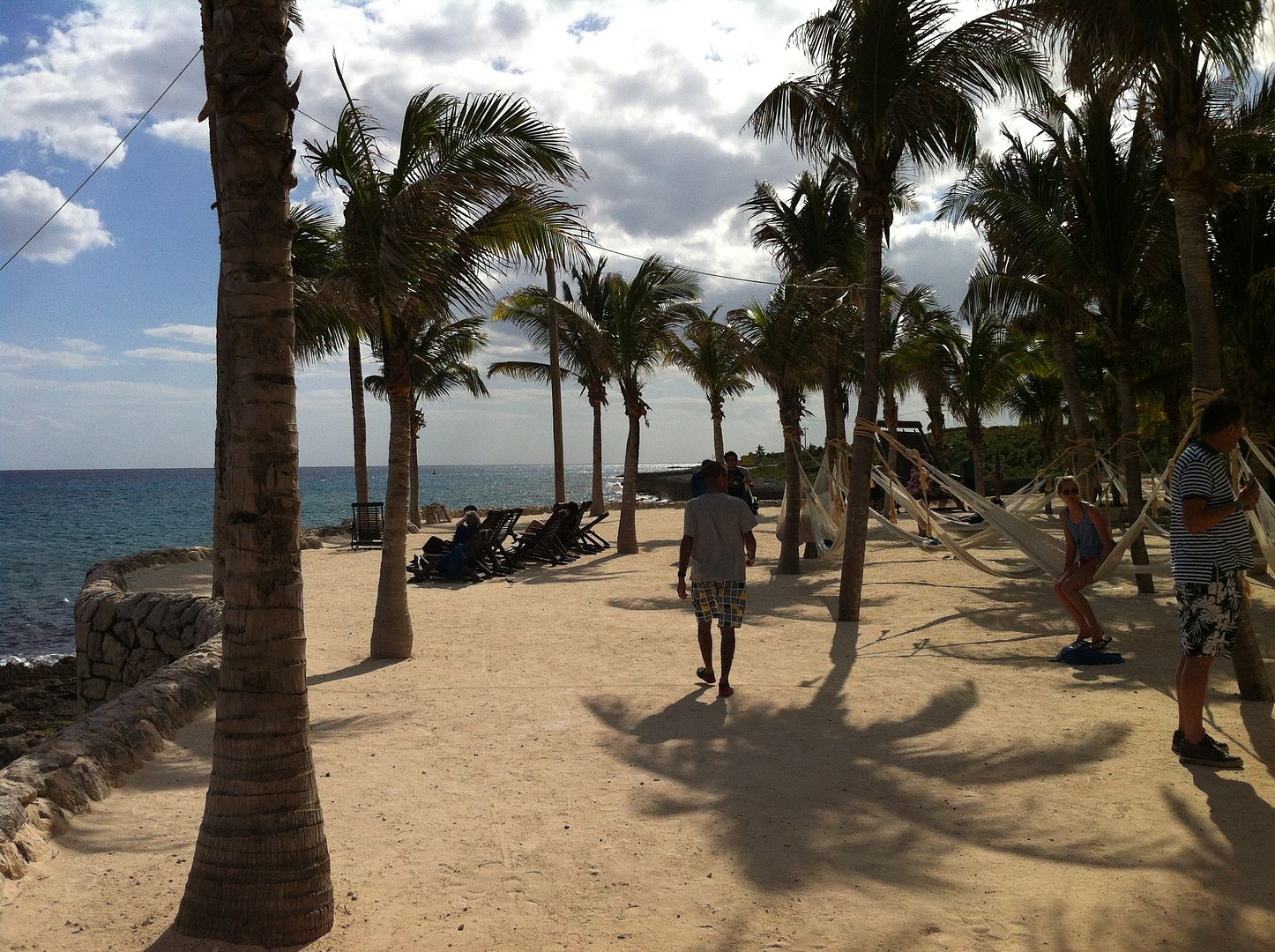
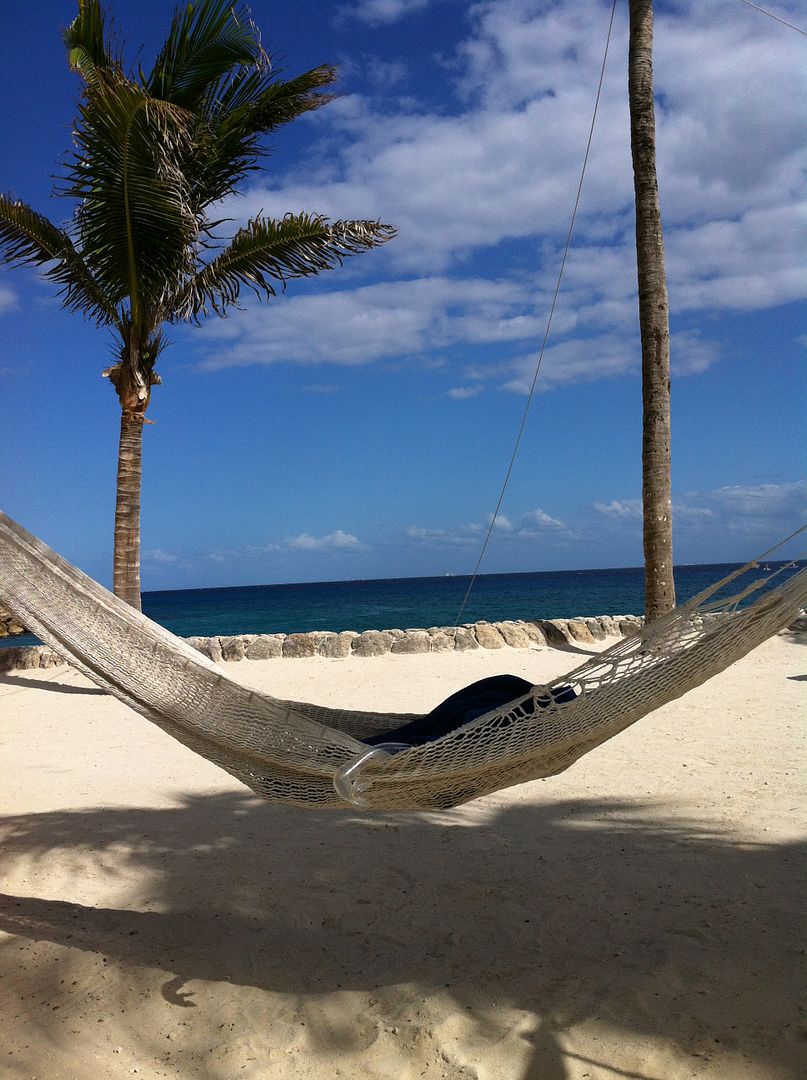
Xcaret is also a place ideal for walking and relaxing on the beach. Which so much to see and do in a day, even if you arrive early in the morning, you might not feel you have much time for this. Yet, at the end of the day, after walking so much and experience so much, you might jsut be ready for a nap on the hammock before going to see the main show (which takes place at sunset, just before the park closes.)
But is it the real thing?
Some people turn up their noses at the fact that the whole park is re-enactments and re-constructions. However, there are three points to remember. One is that they are amazingly goodre-enactments and reconstructions. The “real thing” is hardly better. Secondly, as I said, to see all of this traveling around Mexico, you would need a few months and a few thousand dollars – just to see the same amount – not even more.
Finally, many of the items you simply wouldn’t see. For example, seeing an authentic Mayan ritual (not a re-enactment by middle-class Europeans) is very difficult. They exist, but not in the places where most travelers can easily get to (or would want to go to.) And these enactments are by people of real Mayan and other indigenous decent. Xcaret is both easily accessible and as close to the real thing as it gets.
What’s Next …
This is such a brief overview of Xcaret, it is like peaking your head into the gate for 5 minutes and stepping out again.
Although it still won’t do the park due credit, I’m dedicating the next week (starting Monday) to sharing pictures and descriptions of the various aspects mentioned here. I hope you enjoy!
TOPMexicoRealEstate.com; Mexico’s Leading Network of Specialists for Finding and Purchasing Mexican Properties Safely
Yesterday and the day before I posted some pictures of the main square and various sights around town in Valladolid, a beautiful, quaint and very non-touristy colonial Mayan town in Yucatan. (See Let’s Go to Valladolid, Again! Gallery Part 2 – Around Town.)
Something you’ll note if you go to Valladolid, as is the case with many colonial and old European towns, it’s surprising how many churches and chapels there are in a town that you can probably walk across in half an hour (and I don’t mean just the downtown – that’s from one end of town to the other!)
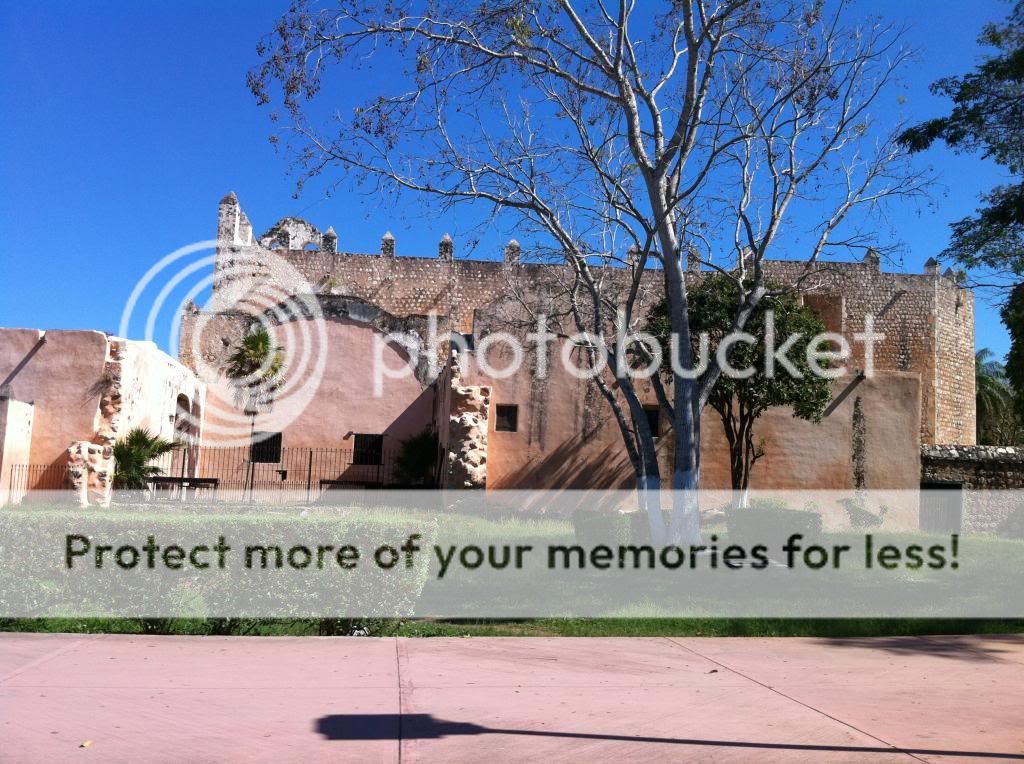
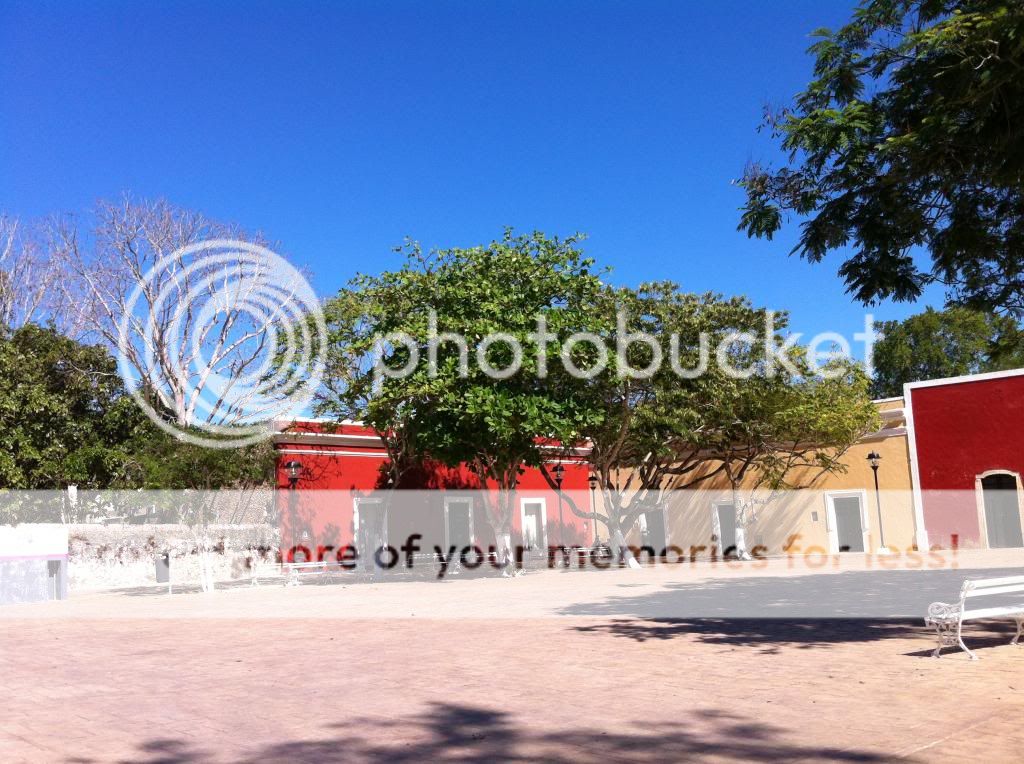
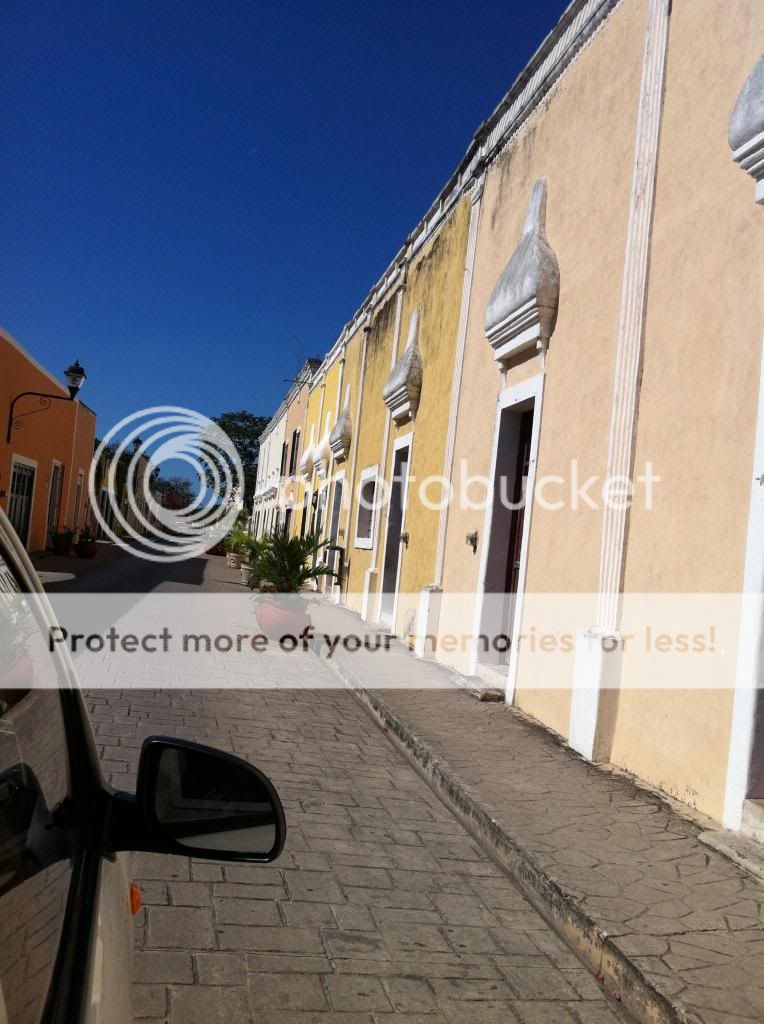
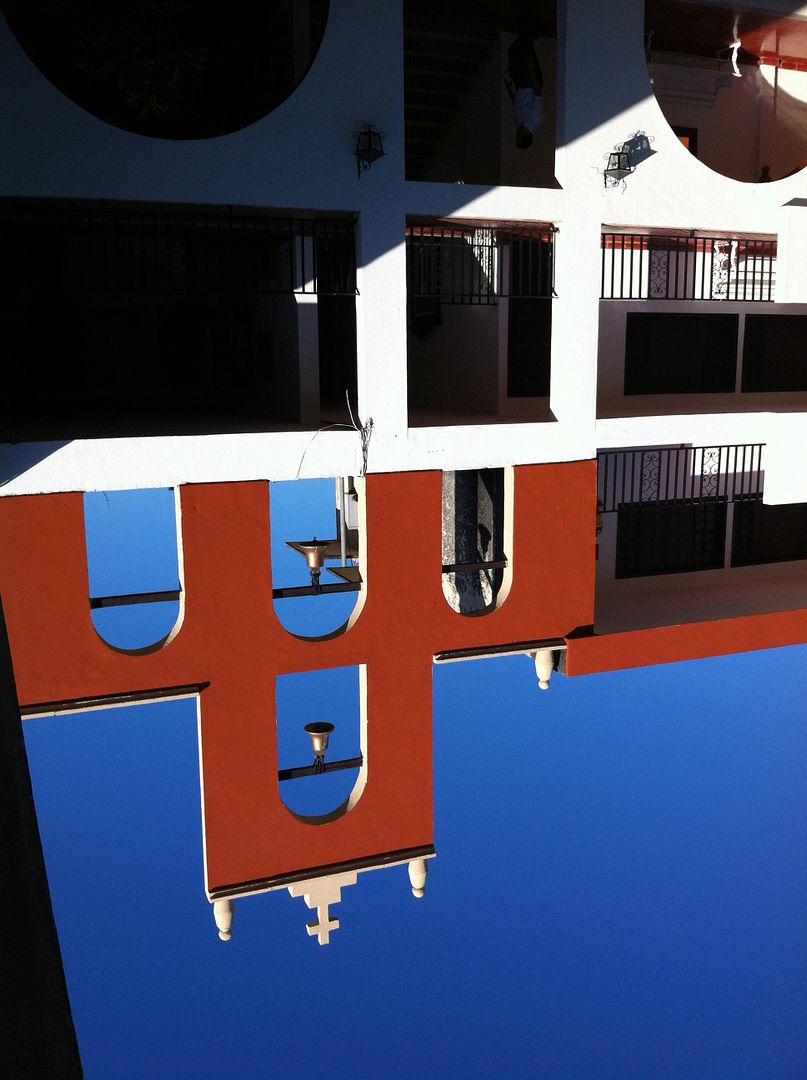
On Monday, I put up some pictures of the main church. Today I am going to share some pictures of the town’s large monastery (which I believe is still used as a monastery, which is rather rare for colonial Mexican monasteries and convents) and the surrounding neighborhood:
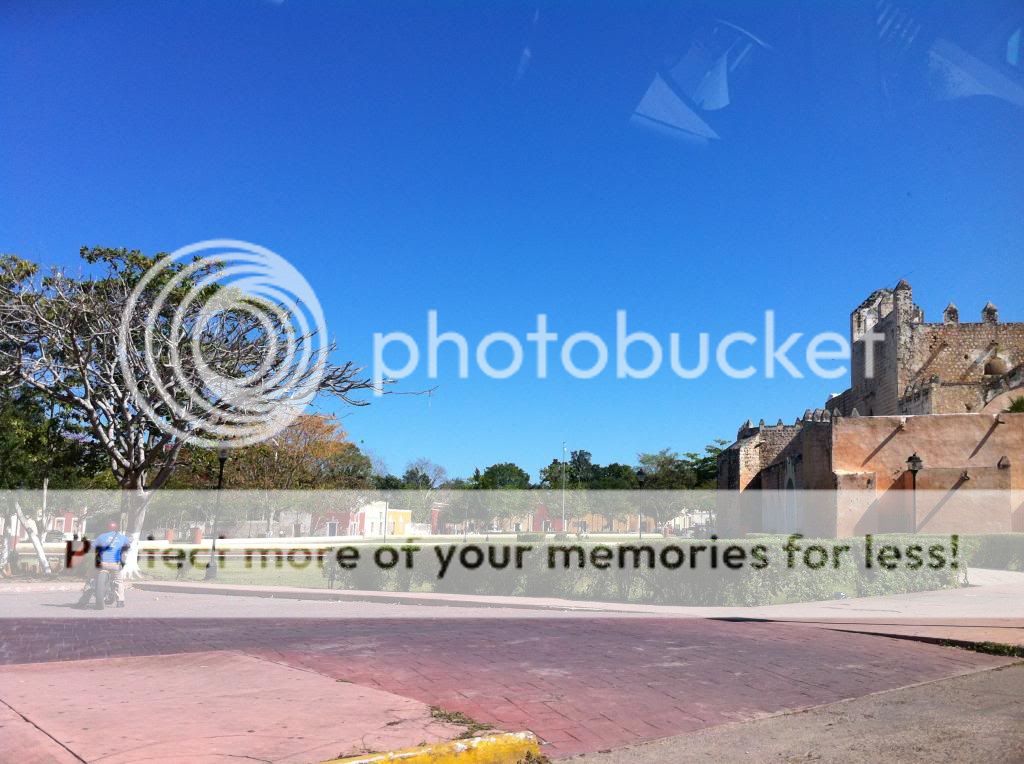
It’s rare to find a town that is so charming and authentic, yet almost completely undiscovered that is so close to major tourist centers like Playa del Carmen, Cancun, Merida and Chichen Itza (in fact, it is smack dab in the middle of all of these, and only between 30 min and 2 hours away from each of them.) This is truly an undiscovered gem and great place for retirement travel in Mexico.
TOPMexicoRealEstate.com; Mexico’s Leading Network of Specialists for Finding and Purchasing Mexican Properties Safely
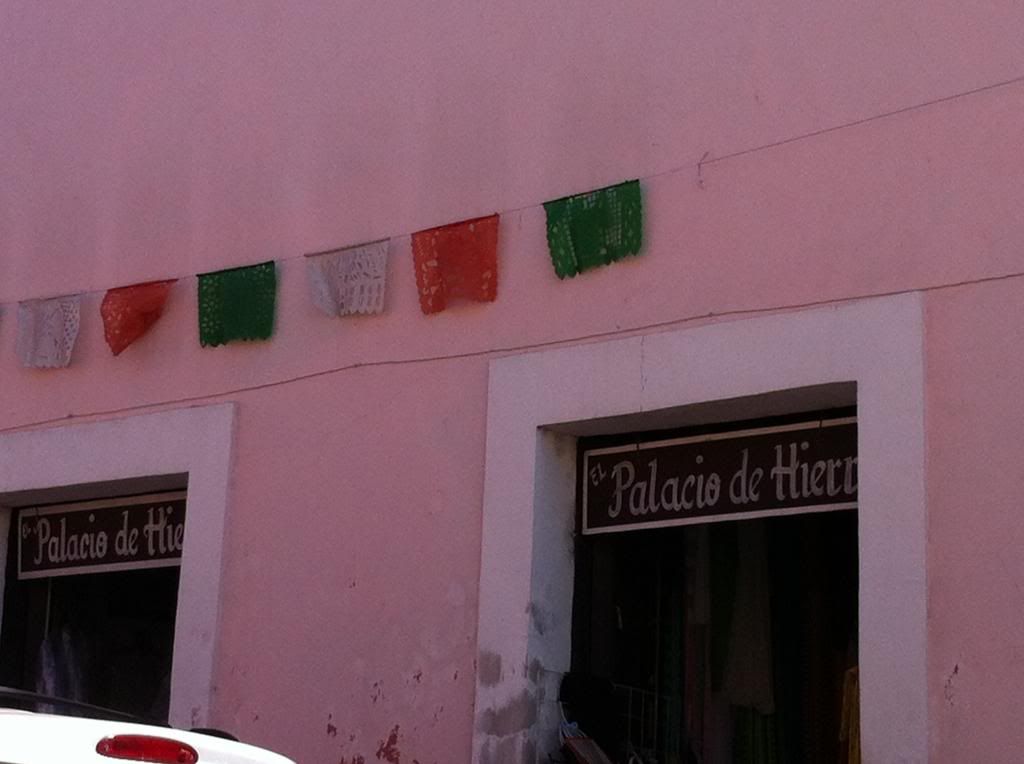
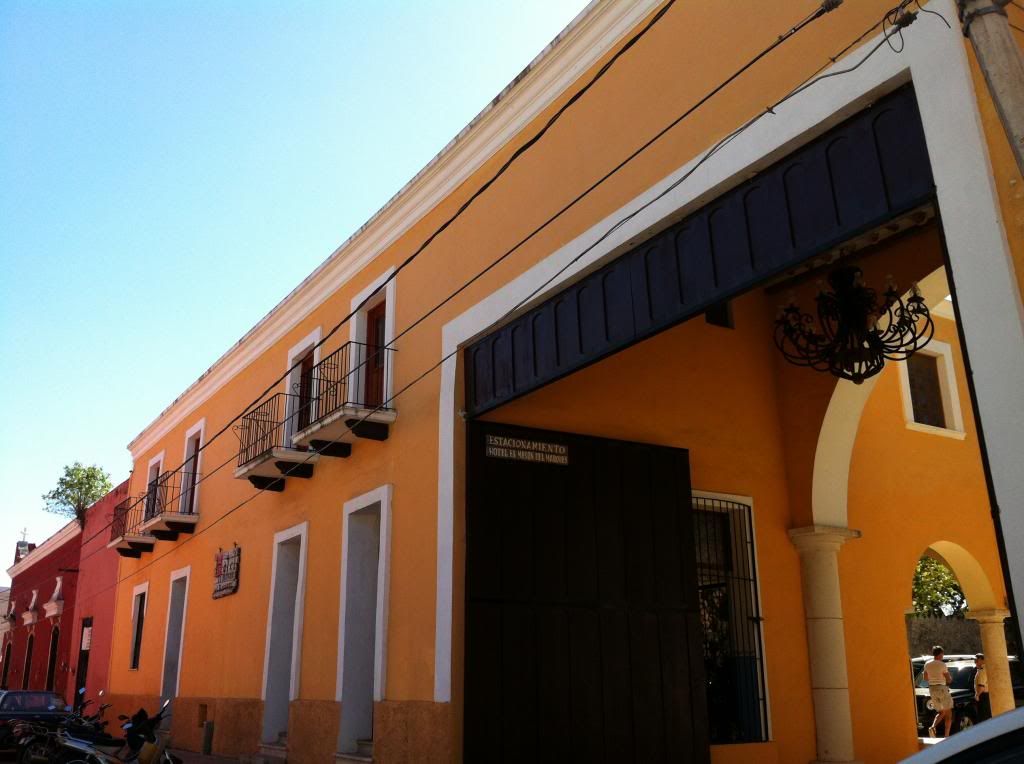
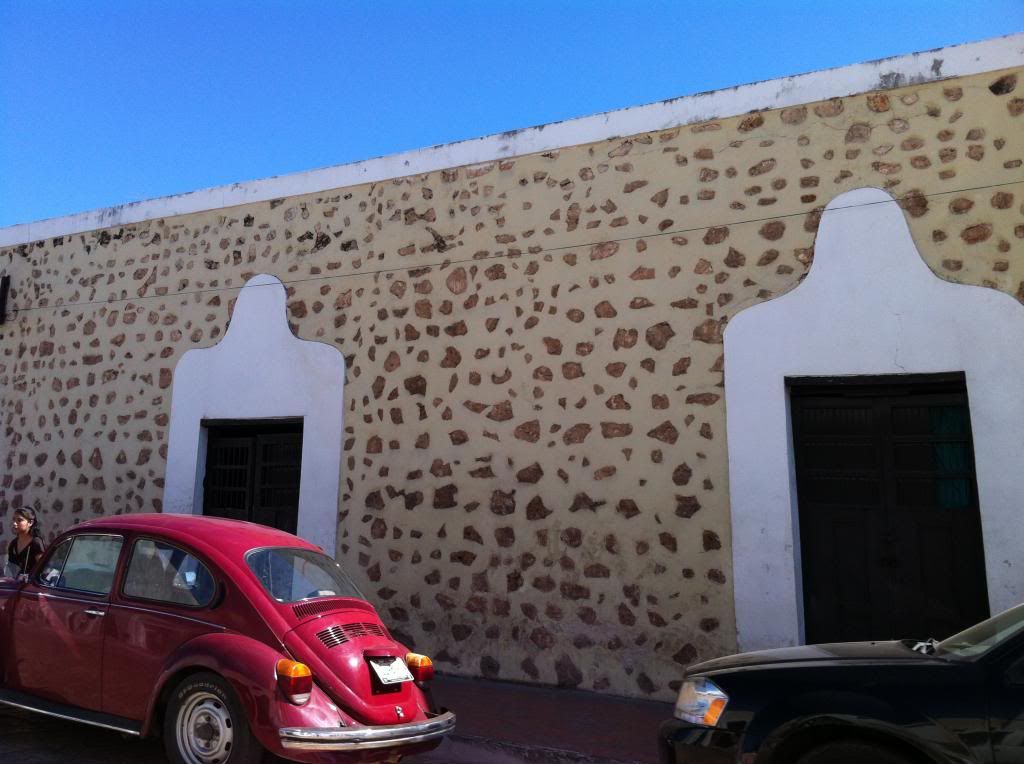
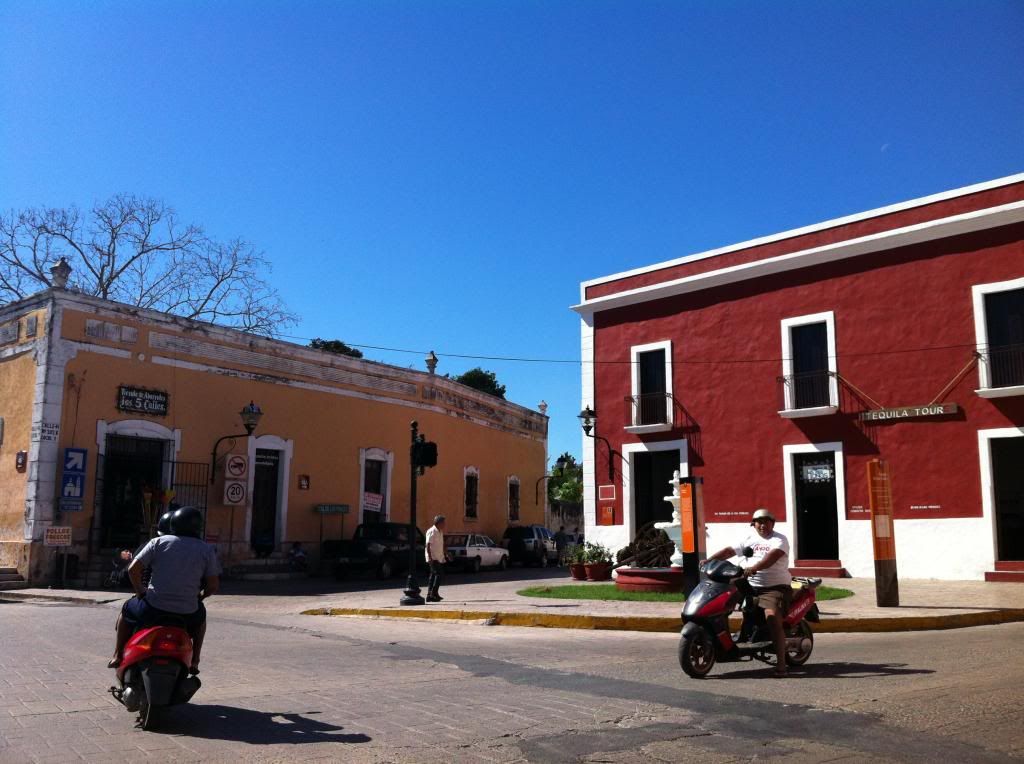
Yesterday, I shared some pictures of Valladolid’s main church and town square. (See Let’s Go to Valladolid, Again! Gallery Part 1 – Church & Town Square.) Today, I’m going to continue with pictures of various scenes from around this charming, colonial Mayan town. As I said yesterday, the town is not touristy, but it gains it’s charm from being more of the “real Mexico” with old-time shoemakers, local butcher shops tended by mustached men with cowboy hats and meat cleavers and the like.
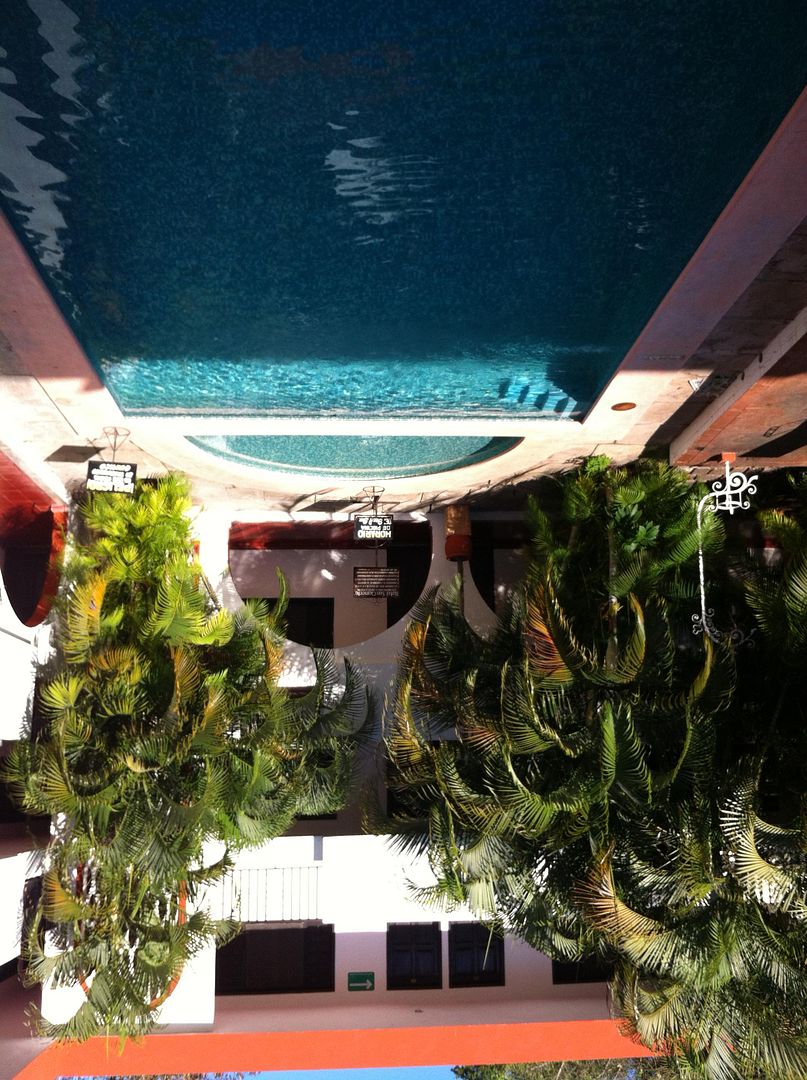
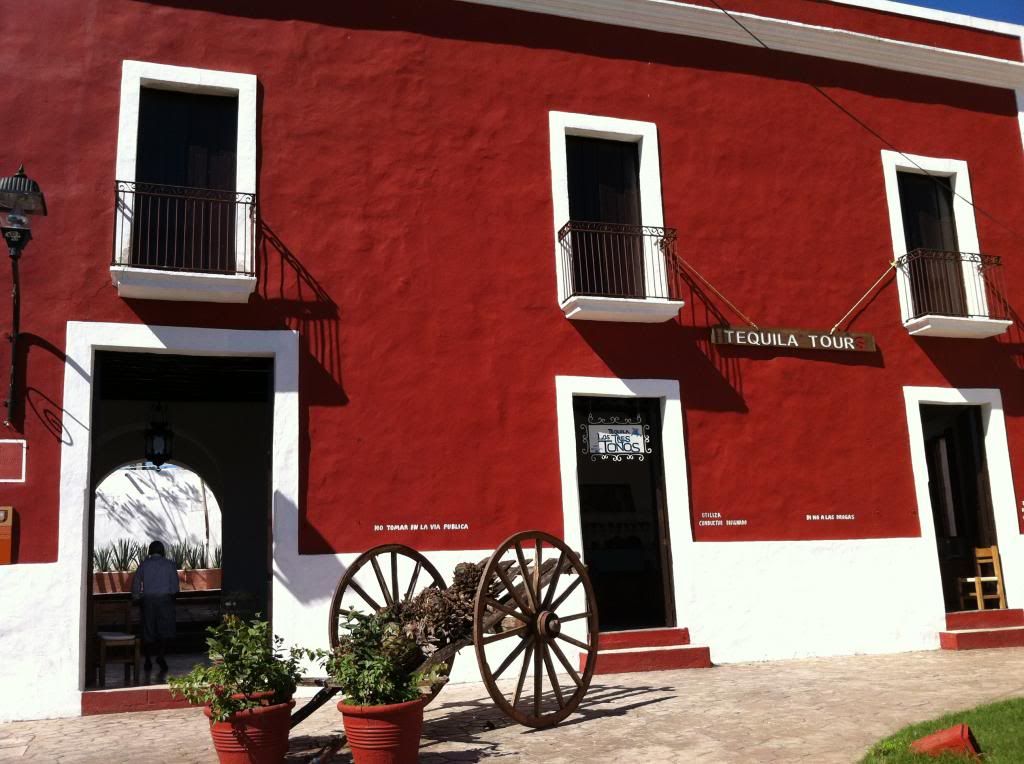
First of all, the hotel where we stayed. All of the hotels are smaller, local, colonial inns that are as charming as the town itself:
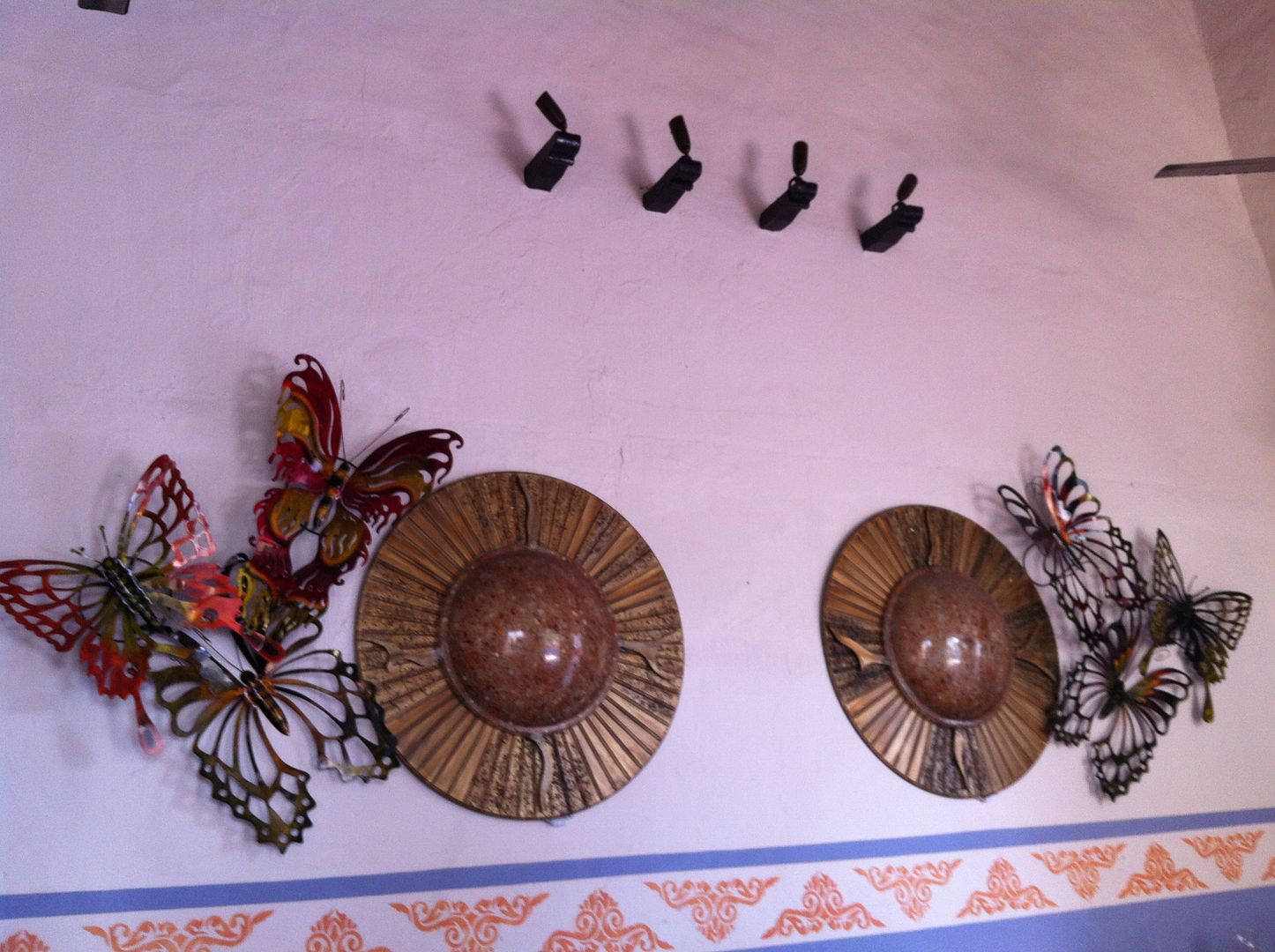
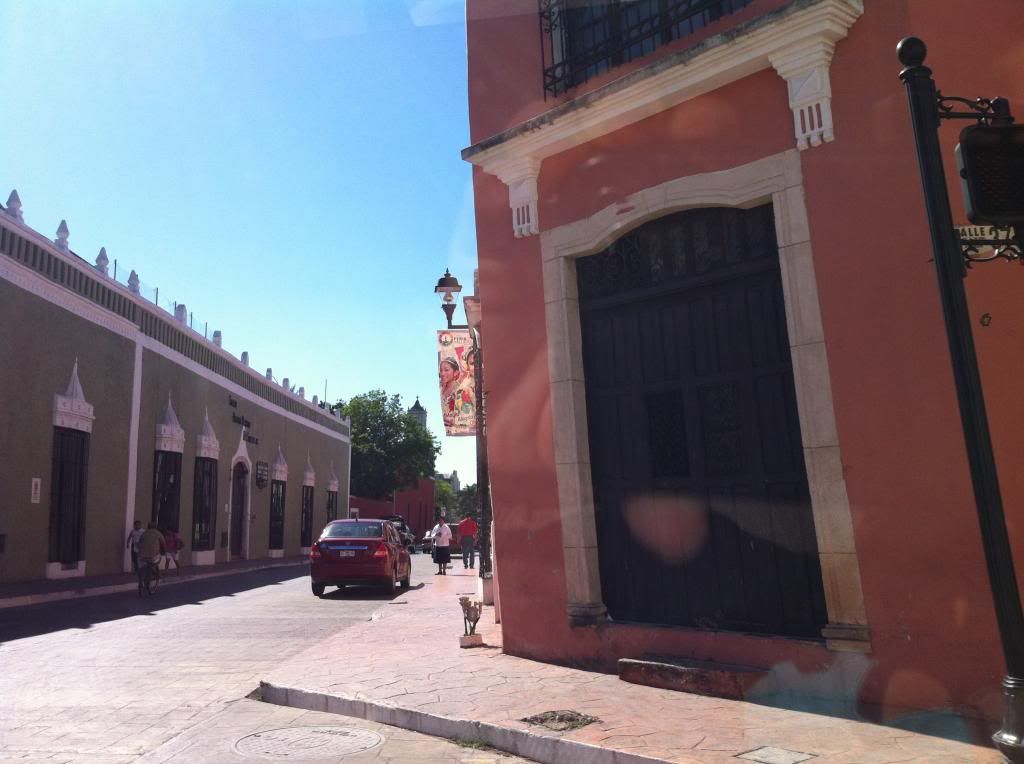
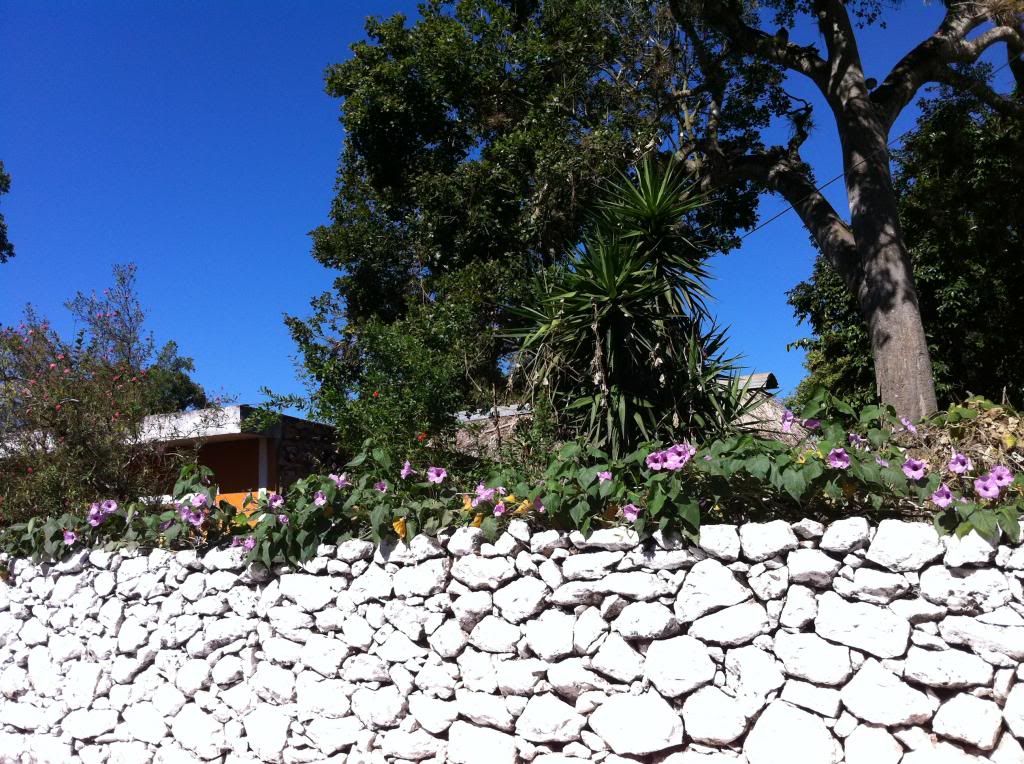
And now, just some random scenes from around town:
(By the way, anyone who knows Mexico will know that “Palacio de Hiero” is an nice, modern, upscale department store – I wonder if they had permission to use the name?!)
Tomorrow will be the final post in this series with pictures of the monastery.
TOPMexicoRealEstate.com; Mexico’s Leading Network of Specialists for Finding and Purchasing Mexican Properties Safely




 Unless you’ve been to Xcaret, then I’m sure you probably haven’t seen anything as spectacular as this. And the word “spectacular” is so appropriate; it both reflects the Spanish name for “show” or “spectacle” which is the title of the show – Mexico Espectacular – and also the impression the show has left on me every time I’ve seen it!

 Mexico is a country rich in wildlife and nature. As with so many other attractive aspects of things to see and experience in Mexico, Xcaret offers a very good taste of the kinds of colorful birds, wild cats and nature you will find – at least for the Yucatan Peninsula.
 On Friday, I gave an introduction to the beautiful eco theme park call Xcaret, giving an overview and sharing some pictures. (See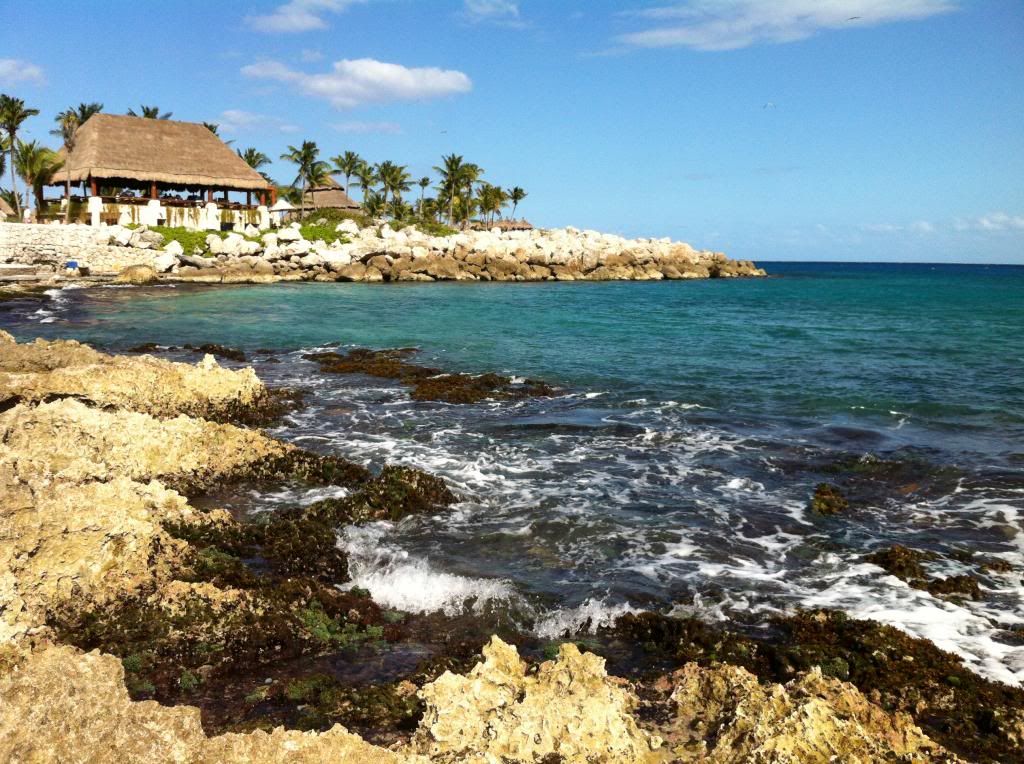


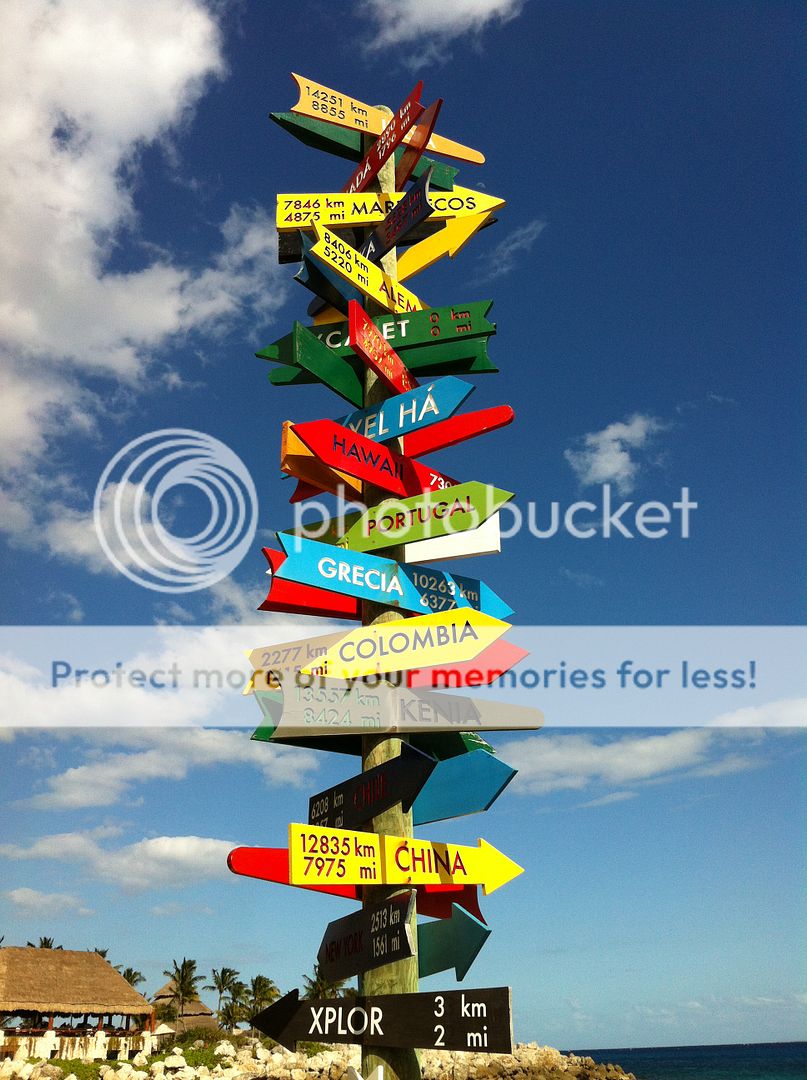 I’ve pointed out before that contrary to Hollywood’s depiction Mexico is full of variety in food, culture, music, art, climate, biospheres and many other points. If you wanted to take a tour of even a brief taste of some this country’s variety and beauty, you would be looking at spending a couple of thousands of dollars and a few months of your life. It would most certainly be well worth the time and money.